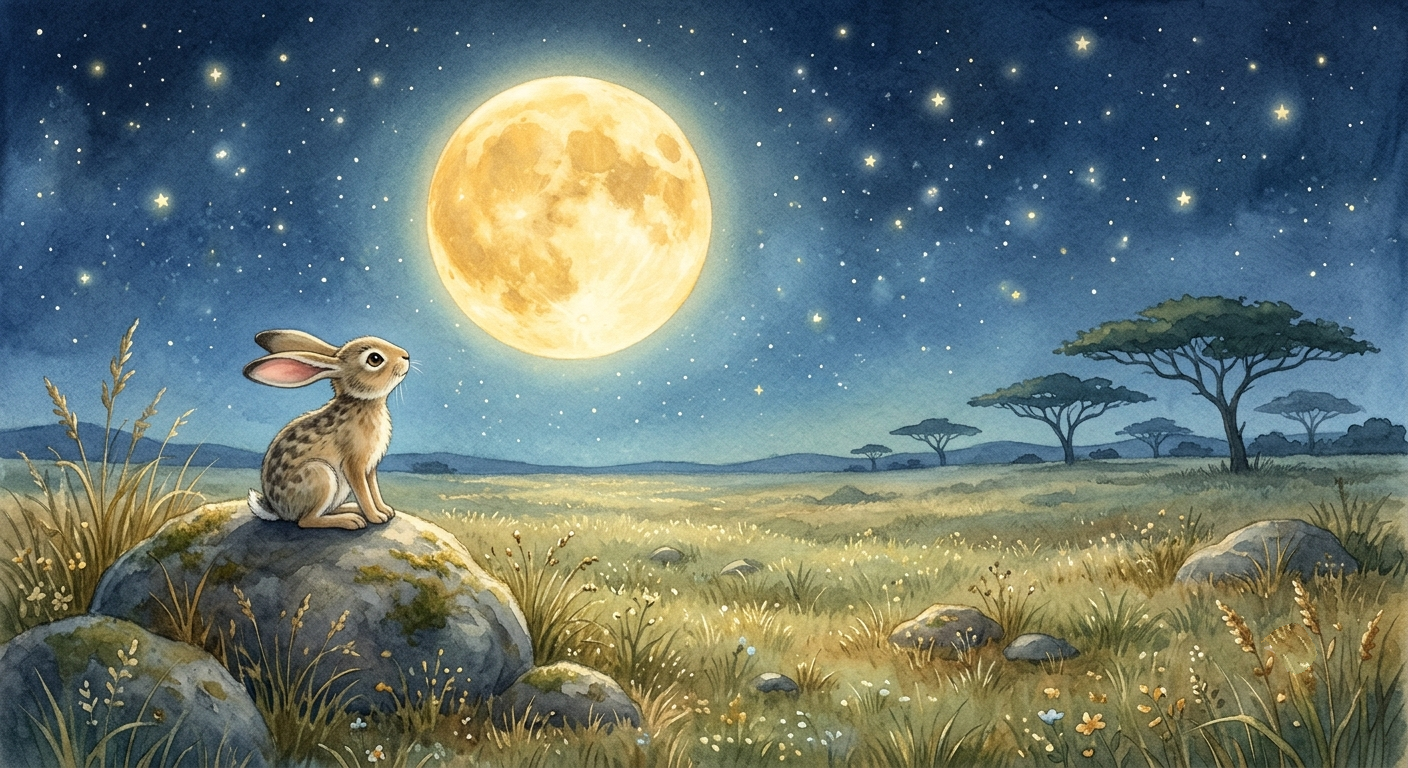
这个故事,来自南部非洲的桑人(也叫布须曼人),他们是世界上历史最悠久的民族之一,世代生活在非洲南部的草原和沙漠里。桑人没有文字,几千年来,所有的知识和故事,全靠一代代人用嘴巴讲、用耳朵听,一点一点传下来——这个关于月亮和野兔的故事,就是这样流传至今的。
This story comes from the San people (also called Bushmen) of southern Africa, one of the oldest peoples in the world, who have lived for generations across the grasslands and deserts of southern Africa. The San had no writing system, so for thousands of years, all their knowledge and stories were passed down purely by speaking and listening, one generation to the next, and this story about the Moon and the Hare has survived down to today in exactly that way.
桑人世代观察夜空,发现月亮总是有规律地圆了又缺、缺了又圆,好像"消失"之后总会再"回来"。这个"月亮与野兔"的故事,就是他们对这个自然现象讲出的解释,也顺便解释了野兔嘴唇为什么会有一道豁口——这类"用故事解释自然现象"的传说,在世界各地的古老文化里都非常常见。
Generation after generation, the San watched the night sky and noticed that the Moon always waxed and waned in a steady rhythm, seeming to disappear and then always come back again. The story of the Moon and the Hare is the explanation they told for this natural pattern, and along the way it also explains why the hare's lip has a small split in it. This kind of story, one that explains a natural phenomenon, is extremely common across ancient cultures all around the world.
🌙 第一百零三个故事,一次没有传对的口信
付费解锁完整故事 · 完整情景对话 · 趣味词卡
🔒 后续内容已锁定
一次付费解锁完整故事 · 情景对话 · 趣味词卡 · 1年时效
小喜仰头看着夜空问阿鸦:"月亮为什么总是一会儿圆一会儿缺呀?"阿鸦说:"在非洲南部,桑人有一个古老的传说,说的正是这件事——还跟野兔嘴唇上那道豁口有关系呢。"
Xiaoxi looked up at the night sky and asked Aya, why does the Moon keep changing from full to thin and back again? Aya said, in southern Africa, the San people have an ancient legend about exactly this, and it is also connected to the little split in a hare's lip.
小喜追问:"豁口?那是什么意思呀?"阿鸦说:"很久很久以前,月亮想给草原上的人们捎一句重要的话,它找来了跑得最快的野兔当信使——可这一趟送信,却出了个小差错。"
Xiaoxi pressed, a split? What does that mean? Aya said, long, long ago, the Moon wanted to send an important message to the people of the savanna, and it asked the hare, the fastest runner, to be its messenger. But on this errand, a small mistake happened.
小喜好奇地问:"月亮到底想说什么呀?"
Xiaoxi asked curiously, what exactly did the Moon want to say?
阿鸦说:"月亮想告诉大家一件温柔的事——它自己每个月都会'消失'一阵子,可总会重新亮起来,它希望人们知道,这份'总会回来'的心意,也是留给大家的。"
Aya said, the Moon wanted to tell everyone something gentle, that it disappears for a while every month, but always shines again, and it wanted people to know that this idea of always coming back was meant as a gift for them too.
小喜问:"那野兔把这句话,好好带到了吗?"
Xiaoxi asked, did the hare carry that message safely?
阿鸦卖了个关子:"它跑得太急,一路上蹦蹦跳跳,光顾着看路边的花啦、追着蝴蝶跑啦,等赶到人们面前,张嘴一说,话已经悄悄变了样。"
Aya teased mysteriously, it ran too hurriedly, hopping and skipping along the way, distracted by the flowers by the road and a butterfly it chased, and by the time it arrived and opened its mouth, the message had quietly changed.
小喜惊讶地问:"月亮后来知道了吗?它是怎么处理的?"
Xiaoxi asked in surprise, did the Moon find out later? How did it handle it?
阿鸦笑着说:"月亮没有生气地惩罚它,只是轻轻叹了口气——而野兔嘴唇上留下的那道豁口,从此就成了提醒大家'传话要认真'的小小印记。"
Aya laughed and said, the Moon did not get angry and punish it, it only sighed gently, and the little split left on the hare's lip became a small reminder from then on, that carrying a message deserves care.
小喜感叹道:"原来野兔不是天生嘴唇就豁着的,是因为那次没有认真传话呀。"阿鸦点点头:"没错。传一句重要的话,哪怕只是几个字,也值得认真对待——而月亮每个月都变回满月这件事,也一直在提醒大家:美好的心意,值得一次又一次地被记起。"
Xiaoxi sighed, so the hare was not born with a split lip, it happened because that message was not carried carefully. Aya nodded, exactly. Passing along an important message, even just a few words, deserves real care, and the way the Moon turns full again every month keeps reminding everyone that a good message is worth being remembered again and again.
你知道吗?这个关于月亮与野兔的故事,最早是由研究者在十九世纪末,向|Xam语系的桑人长者们请教,一句一句记录下来的,收进了一本叫《布须曼民间传说集》的书里,是了解南部非洲最古老族群口传文化的重要资料。世界上很多古老文化,都有"月亮圆缺"和"生命循环"联系在一起的传说,这说明抬头看月亮、思考生命这件事,几乎是全人类共同的习惯。
Did you know? This story about the Moon and the Hare was first recorded word by word by researchers in the late nineteenth century, who learned it directly from |Xam-speaking San elders, and it was included in a book called Specimens of Bushman Folklore, an important source for understanding the oral culture of one of the oldest peoples in southern Africa. Many ancient cultures around the world have legends linking the phases of the Moon to the cycle of life, which shows that looking up at the Moon and thinking about life is a habit shared by nearly all of humanity.
支付以下动态金额(基准¥3,浮动±0.5)