← 返回花园首页
📖 故事屋 📚 阿鸦小喜绘本馆
黑洞与宇宙大爆炸
Black Holes and the Big Bang
阿鸦和小喜
阿鸦 小喜
🔬 科学小知识

1929年,天文学家哈勃发现几乎所有星系都在远离我们,而且越远的星系退行速度越快——这意味着宇宙正在膨胀。往回倒推,138亿年前,整个宇宙曾压缩在一个比针尖还小的点上,一次"大爆炸"之后,空间本身开始膨胀,才有了后来的星系、恒星和我们。

In 1929, astronomer Edwin Hubble discovered that almost all galaxies are moving away from us, and the farther away a galaxy is, the faster it recedes — meaning the universe is expanding. Tracing this backward, 13.8 billion years ago the entire universe was compressed into a point smaller than a pinhead. After a single "Big Bang," space itself began to expand, eventually giving rise to galaxies, stars, and us.

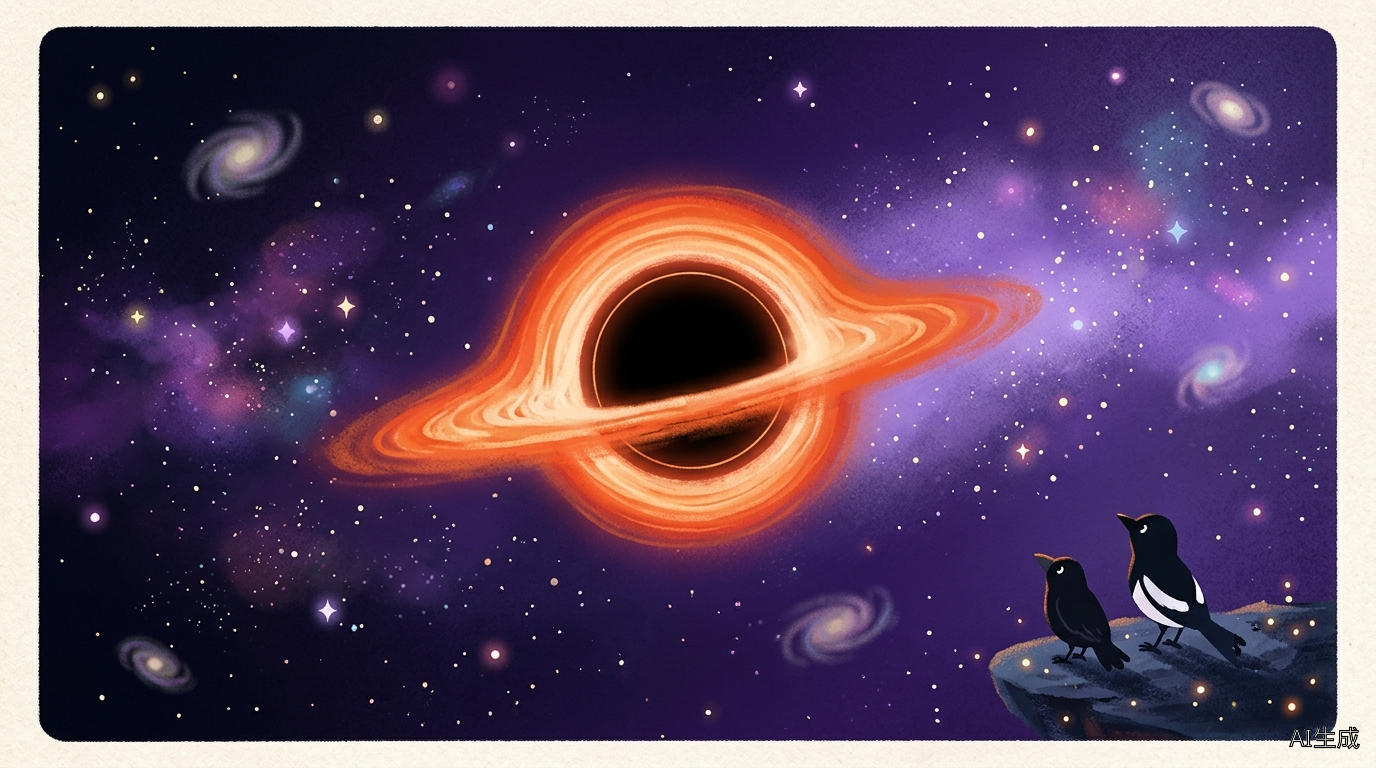
黑洞是大质量恒星死亡后留下的产物:当它自身的引力大到连光都无法逃脱,就形成了黑洞。2019年,人类第一次用"事件视界望远镜"拍到了黑洞的真实照片——一个橙红色光环包围着中心的黑暗区域,那个边界叫"事件视界",一旦跨过去,就再也回不来了。

A black hole is what remains after a massive star dies: when its own gravity becomes so strong that not even light can escape, a black hole is formed. In 2019, humanity captured the first-ever real photograph of a black hole using the Event Horizon Telescope — an orange-red ring of light surrounding a dark central region. That boundary is called the "event horizon," and once you cross it, there is no coming back.

(苹果收听最佳 · 其他手机请用 Chrome 浏览器)

🕳️ 连光都逃不出来的黑洞,宇宙最初竟然只有针尖大小——
当阿鸦一本正经开始讲科学,小喜才发现,这次的"故事"比任何神话都更让人头皮发麻。
付费解锁完整故事 · 黑洞的秘密 · 趣味词卡

一次解锁 · 1年有效 · 支付宝/微信/PayPal
📚 故事系列
  • 🕳️ 黑洞与宇宙大爆炸本期 · NOW
  • 🔥 赤壁之战点击进入
  • 🌌 盘古开天辟地点击进入
  • 🏃 夸父追日点击进入
  • ⚡ 雷神的两个传说点击进入
  • 🦋 梁山伯与祝英台点击进入
  • ⚡ 诸神黄昏点击进入
  • 🐺 阿努比斯与死亡点击进入
  • 🌊 波塞冬与海洋点击进入
  • 🐍 美杜莎与珀尔修斯点击进入
✨ 每期包含
📖
双语故事
💬
情景对话
🎴
词汇卡片
🔊
语音朗读
🕳️ 第21期:黑洞与宇宙大爆炸
黑洞与宇宙大爆炸

🔒 后续内容已锁定
一次付费解锁完整故事 · 情景对话 · 趣味词卡 · 1年时效

小喜指着图片里那个黑漆漆的圆圈,凑近了又赶紧后退,"阿鸦,这个黑黑的洞是什么呀?会不会把我们也吸进去?"

Magpie pointed at the pitch-black circle in the picture, leaning in and then quickly backing away. "A-Ya, what is this black hole? Could it suck us in too?"

(苹果收听最佳 · 其他手机请用 Chrome 浏览器)

阿鸦难得推了推并不存在的眼镜,一本正经地说,"今天不讲神仙打架了。讲点真正厉害的——连光都逃不出来的东西。"

A-Ya, for once, pushed up a pair of glasses he did not actually have, and said very seriously, "No gods fighting today. Let us talk about something truly powerful, something not even light can escape."

小喜心里咯噔一下,"阿鸦你这语气……怎么比讲神话还吓人?"

Something in Magpie's chest sank. "A-Ya, that tone of yours... how is it scarier than any myth?"

小喜追问,"那黑洞到底是用什么做的呀?"

Magpie pressed on, "So what is a black hole actually made of?"

阿鸦摇摇头,"它不是一个'东西'。是空间本身,被压弯了。"

A-Ya shook his head. "It's not a 'thing'. It's space itself, bent out of shape."

🕳️ 阿鸦讲故事 · 黑洞与宇宙大爆炸
📍 场景:星空下的阳台 · 阿鸦难得认真开讲科学
🐦
阿鸦,你别吓我,黑洞真的会把我们吸进去吗?
A-Ya, do not scare me, will a black hole really suck us in?
🐦 小喜小声问……
🐦‍⬛
放心,黑洞离我们远着呢——不过如果你真的掉进去,别说被吸进去了,你会先被拉成一根面条,天文学家还真给这个过程起了个名字,叫"意大利面化"。
Do not worry, black holes are very far away, but if you really did fall into one, you would not just get sucked in, you would first be stretched into a noodle. Astronomers actually have a real name for this process, they call it spaghettification.
📌 意大利面化 (yìdàlìmiàn huà) = spaghettification
🐦
意大利面化?!那黑洞到底是怎么来的呀?
Spaghettification?! So where do black holes actually come from?
🐦 小喜倒吸一口凉气……
🐦‍⬛
一颗比太阳大很多倍的恒星,燃料烧完之后撑不住自己的重量,会突然向内塌缩——原本几百万公里大的星体,被压缩成一个只有几十公里的点,引力却强到连光都逃不出来,这就是黑洞。
A star many times more massive than the sun, once it runs out of fuel, can no longer support its own weight and suddenly collapses inward, a star that was once millions of kilometers across gets crushed down to a point only tens of kilometers wide, yet its gravity becomes so strong that not even light can escape. That is a black hole.
📌 塌缩 (tā suō) = to collapse inward
🐦
那……宇宙本身又是怎么来的呀?会不会也是从一个黑洞里蹦出来的?
Then... where did the universe itself come from? Could it have popped out of a black hole too?
🐦 小喜歪着头想了想……
🐦‍⬛
科学家现在最认可的说法是,138亿年前,整个宇宙压缩在一个比针尖还小的点里,一次大爆炸之后开始疯狂膨胀,慢慢冷却,才有了后来的星系、恒星,还有……我们。
The theory scientists trust most today is that 13.8 billion years ago, the entire universe was compressed into a point smaller than a pinhead. After a single Big Bang it began expanding at incredible speed, slowly cooling down, eventually giving rise to galaxies, stars, and... us.
📌 大爆炸 (dà bàozhà) = the Big Bang
🐦‍⬛ 阿鸦说

小喜愣住了,"我们?我们也是大爆炸变出来的?"阿鸦沉默了一下,语气少见地温柔,"是啊。你身体里的每一个原子——包括你骨头里的钙,血液里的铁——都是很久很久以前,某颗恒星燃烧到最后一刻爆炸时留下的碎片。我们不是在看星星,我们本来就是星星的一部分。"小喜低头看着自己的翅膀,第一次觉得,自己好像也挺了不起的。
Magpie froze, "Us? We came from the Big Bang too?" A-Ya was quiet for a moment, his tone unusually gentle, "Yes. Every atom in your body, including the calcium in your bones and the iron in your blood, is a fragment left behind by some star that burned all the way to its final, explosive moment, long, long ago. We are not just looking at the stars, we were always part of them." Magpie looked down at her own wings, and for the first time, felt like she was pretty amazing too.

🎴 黑洞与宇宙大爆炸词汇卡 · Cosmos Word Cards
🕳️
黑洞
hēi dòng
black hole
黑洞是宇宙中引力强到连光都无法逃脱的天体。
A black hole is a cosmic object with gravity so strong that not even light can escape.
🧲
引力
yǐn lì
gravity
引力越强,需要摆脱它的速度就越快。
The stronger the gravity, the faster the speed needed to escape it.
恒星
héng xīng
star
太阳就是一颗恒星,它不断燃烧自己的燃料发光发热。
The sun is a star, constantly burning its own fuel to produce light and heat.
💥
塌缩
tā suō
to collapse inward
恒星燃料耗尽后会向内塌缩,可能形成黑洞。
After a star runs out of fuel, it can collapse inward and may form a black hole.
🌀
事件视界
shìjiàn shìjiè
event horizon
一旦越过事件视界,就再也无法逃脱黑洞的引力。
Once you cross the event horizon, you can no longer escape the black hole's gravity.
💫
大爆炸
dà bàozhà
the Big Bang
大爆炸之后,宇宙开始从一个极小的点迅速膨胀。
After the Big Bang, the universe began expanding rapidly from an extremely tiny point.
🎈
膨胀
péngzhàng
expansion
宇宙至今仍在膨胀,星系之间的距离越来越远。
The universe is still expanding today, and the distances between galaxies keep growing.
🌌
星系
xīngxì
galaxy
我们生活的银河系,只是宇宙中数千亿个星系之一。
The Milky Way, where we live, is just one of hundreds of billions of galaxies in the universe.
🌌 小喜学到了 · Fun Facts

有趣的是,"大爆炸"这个说法,其实是天文学家弗雷德·霍伊尔在1949年一次BBC广播里随口提到的——当时他本人其实更支持另一套理论,是在介绍自己并不认同的说法时说出了这个词。没想到这个说法后来反而被全世界采用,成了正式的科学名称,一直沿用至今。🌌🐦

Interestingly, the term "Big Bang" was actually casually mentioned by astronomer Fred Hoyle in a 1949 BBC radio broadcast, at a time when he himself actually favored a rival theory, and used the term while describing an idea he did not agree with. Surprisingly, the term was later adopted worldwide and became the official scientific name, still used to this day.

🔒 后续内容已锁定 · 付¥3一次解锁全部内容 · 1年有效