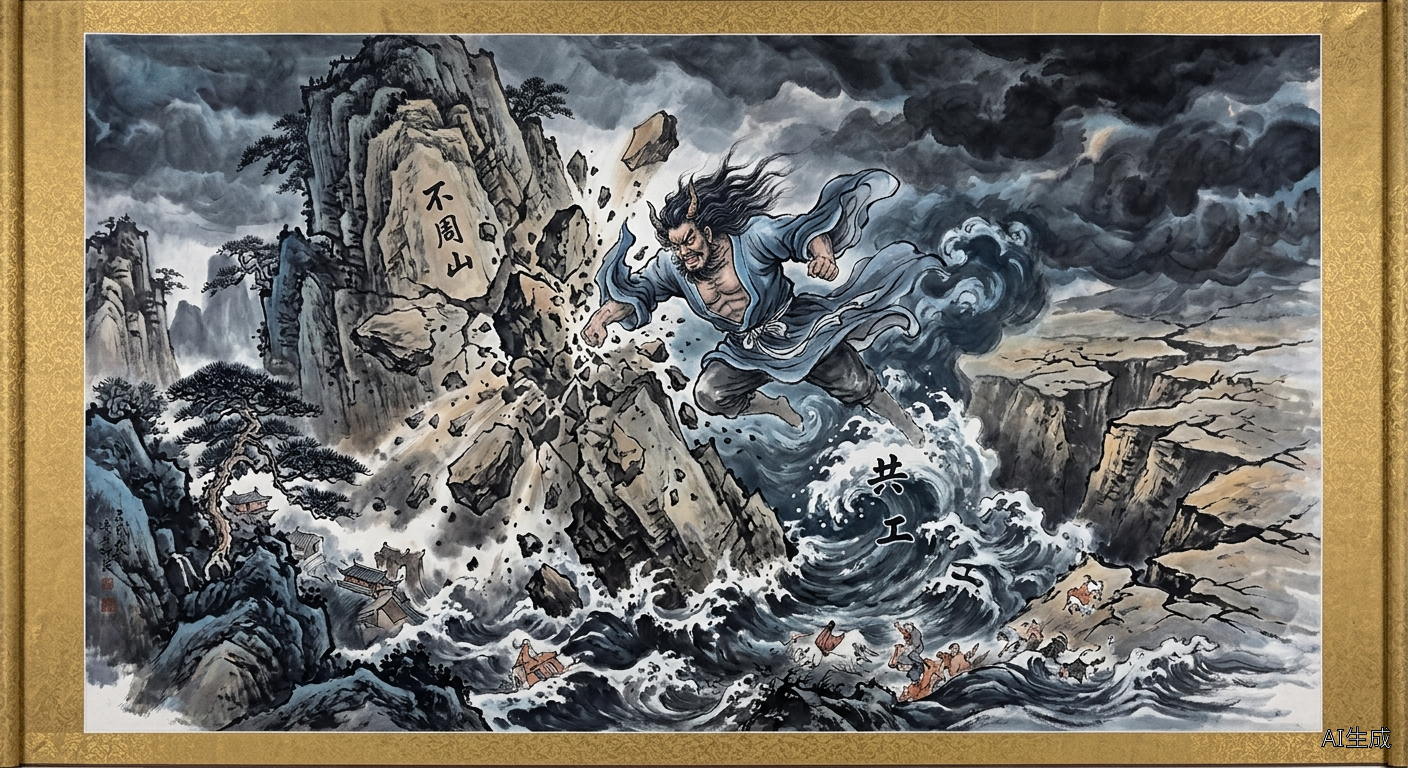
共工触山的故事最早记载在《淮南子·天文训》里,是解释中国天地面貌的著名神话。传说上古时期,水神共工和天神颛顼因为争夺天下共主的地位,发生了激烈的冲突。两人争执不下,最后打了起来。
The story of Gong Gong crashing into the mountain is first recorded in the Astronomy chapter of the Huainanzi, a famous myth explaining the shape of heaven and earth in ancient China. Legend says that in ancient times, the water god Gong Gong and the sky god Zhuanxu had a fierce conflict over who should rule the world. Their dispute eventually turned into a fight.
共工水性刚烈,颛顼却步步为营,一场恶战下来,共工渐渐支撑不住了。他又羞愧又愤怒,一头朝着西边的不周山撞了过去。谁也没想到,这一撞,竟然撞断了撑起天空的柱子!
Gong Gong's watery nature was fierce, but Zhuanxu fought carefully step by step, and after a fierce battle, Gong Gong gradually could not hold on. Ashamed and furious, he rammed his head straight into Mount Buzhou in the west. No one expected that this crash would actually snap the pillar holding up the sky!
🌋 一位天神愤怒地一头撞向大山——
天地竟然因此永远变了模样……
付费解锁完整故事 · 天崩地裂的传说 · 趣味词卡
🔒 后续内容已锁定
一次付费解锁完整故事 · 情景对话 · 趣味词卡 · 1年时效
小喜看着画里一座山轰然倒塌,好奇地问:"阿鸦,这座山怎么突然断成两截了?发生了什么事呀?"
Magpie looked at the painting of a mountain suddenly collapsing, and asked curiously, "A-Ya, why did this mountain suddenly snap in two? What happened?"
阿鸦说:"这座山叫不周山,撞断它的是水神共工。他为什么要这么做呢,这里头还有一段故事。"
A-Ya said, "This mountain is called Mount Buzhou, and the one who broke it was the water god Gong Gong. Why would he do such a thing? There's quite a story behind it."
小喜惊讶:"水神干嘛要去撞一座山呀?"
Magpie was amazed, "Why would a water god go and crash into a mountain?"
阿鸦说:"这正是这个故事最让人意外的地方。"
A-Ya said, "That's exactly the most surprising part of this story."
小喜追问:"怎么意外?"
Magpie pressed on. "Surprising how?"
阿鸦说:"共工和另一位天神争夺天下共主的位置,争着争着打了起来,共工渐渐落了下风。"
A-Ya said, "Gong Gong and another god were competing to rule the world, and as they fought, Gong Gong gradually began to lose."
小喜好奇:"打输了,跟撞山有什么关系呀?"
Magpie was curious, "What does losing have to do with crashing into a mountain?"
阿鸦说:"共工又气又不甘心,一怒之下做了一件谁都没想到的事……具体发生了什么,还得从头讲起。"
A-Ya said, "Furious and unwilling to accept defeat, Gong Gong did something no one expected in his rage... but to find out exactly what happened, we'll have to start from the beginning."
小喜惊讶地说:"这么一撞,天地都变样了!"阿鸦点点头:"中国人至今还用‘天倾西北,地陷东南’来解释为什么河流大多往东流、星星好像往西转呢。后来女娲看到天空破了个大洞,还专门去炼石补天——那又是另一个故事了。"
Magpie said in amazement, "One crash changed the shape of heaven and earth!" A-Ya nodded. "Chinese people still use the phrase the sky tilts northwest, the earth sinks southeast to explain why most rivers flow east and the stars seem to drift west. Later, when the goddess Nu Wa saw a huge hole in the sky, she went to mend it with smelted stones, but that's another story."
共工触山的故事最早见于西汉《淮南子·天文训》,成书于公元前139年左右,比司马迁的《史记》还要早。这个神话很可能源自古人对天地面貌的想象解释——他们观察到中国地势西高东低、河流大多向东流入大海,星辰又仿佛自东向西移动,于是用共工触山、天倾地陷的传说来解释这些自然现象。🌋📜
The story of Gong Gong crashing into the mountain first appears in the Astronomy chapter of the Huainanzi, compiled around 139 BCE, even earlier than Sima Qian's Records of the Grand Historian. This myth likely arose from ancient people's imaginative explanation of the shape of heaven and earth, having observed that China's terrain is higher in the west and lower in the east, that most rivers flow eastward into the sea, and that stars seem to drift from east to west, they used the legend of Gong Gong's crash to explain these natural phenomena.
支付以下动态金额(基准¥3,浮动±0.5)