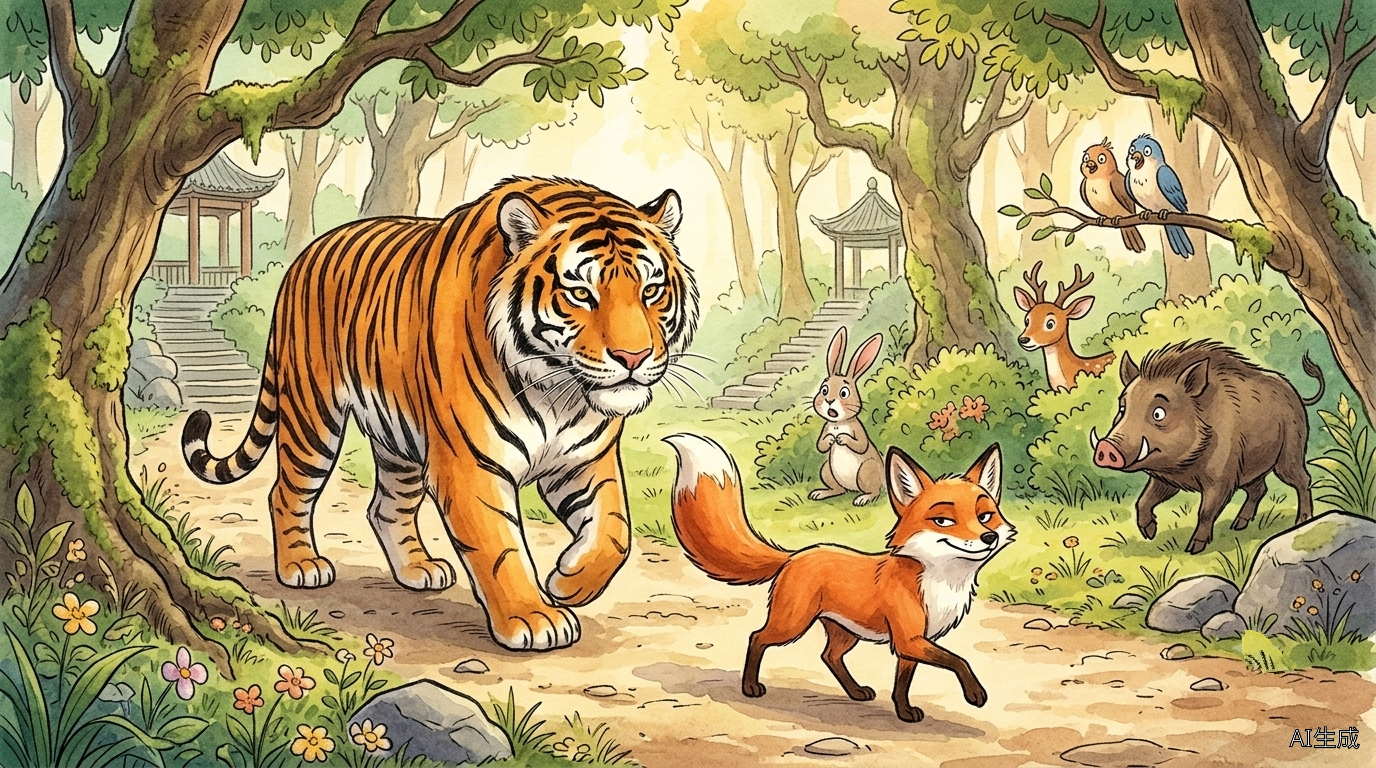
"狐假虎威"出自中国古代的《战国策》,是一则流传两千多年的经典寓言,讲的是狐狸借着老虎的威风吓唬其他动物的故事,后来演变成一个家喻户晓的成语,用来形容"借着别人的势力来吓唬人"。
"The fox borrows the tiger's might" comes from the ancient Chinese text "Stratagems of the Warring States," a classic fable that has been told for over two thousand years. It tells of a fox who used a tiger's fearsome reputation to scare off other animals, and it later became a well-known Chinese idiom describing someone who intimidates others by relying on someone else's power.
这个成语常常被用在生活里,提醒人们要看清楚一件事——到底是谁真正拥有实力,谁又只是借着别人的名头唬人,这也是中国古代寓言里最爱探讨的主题之一:真本事和虚张声势的区别。
This idiom is often used in everyday life to remind people to look closely at a situation, to figure out who truly holds the power, and who is merely bluffing using someone else's name. It's one of the favorite themes explored in ancient Chinese fables: the difference between real ability and empty bluster.
🦊 狐狸被老虎逮住了,眼看就要没命——
它却说出了一句让老虎愣住的话……
付费解锁完整故事 · 狐假虎威的传说 · 趣味词卡
🔒 后续内容已锁定
一次付费解锁完整故事 · 情景对话 · 趣味词卡 · 1年时效
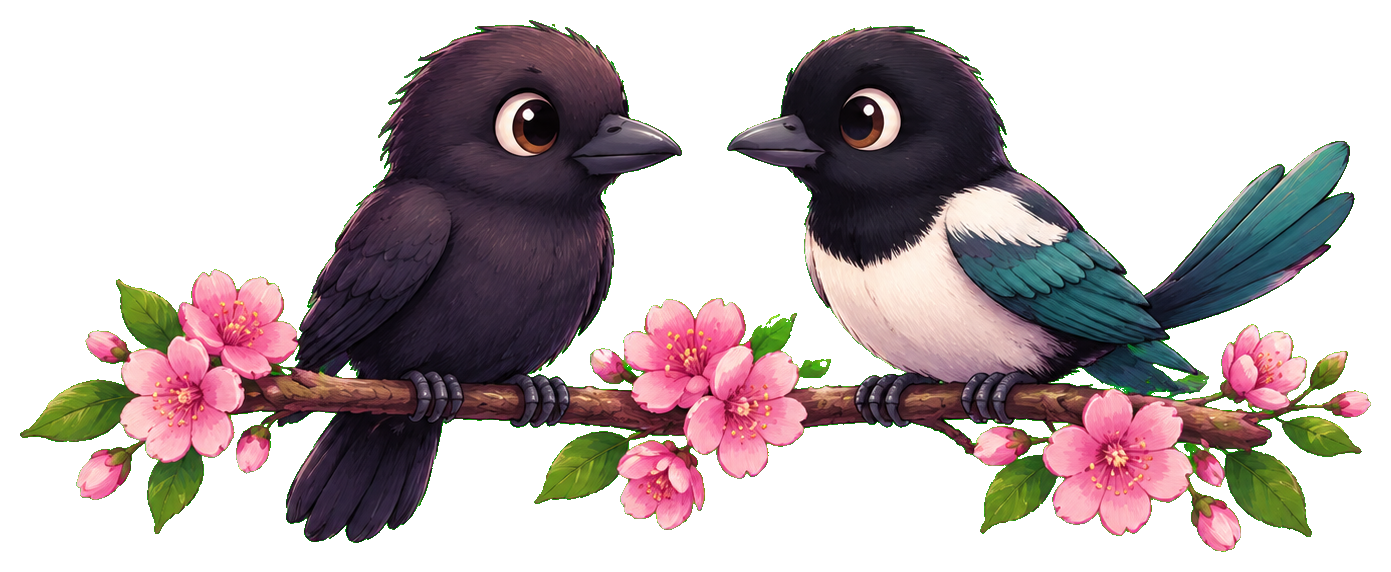
小喜看到画里一只老虎张着大嘴,前面站着一只神气活现的狐狸,好奇地问:"阿鸦,狐狸怎么敢站在老虎面前呀?"
Magpie saw a painting of a tiger with its mouth wide open, and in front of it stood a fox looking very pleased with itself, and asked curiously, "A-Ya, how does the fox dare to stand in front of a tiger?"
阿鸦说:"这只狐狸刚刚被老虎逮住了,眼看就要被吃掉,可它灵机一动,说出了一句让老虎愣住的话。"
A-Ya said, "This fox had just been caught by the tiger, about to be eaten, but it suddenly came up with something clever to say, something that made the tiger freeze."
小喜惊讶:"它说了什么呀?"
Magpie was amazed, "What did it say?"
阿鸦说:"狐狸说自己是天帝派来管理百兽的王,谁吃了它就是违抗天命。"
A-Ya said, "The fox claimed it had been sent by the Heavenly Emperor to rule over all the animals, and that anyone who ate it would be defying heaven's will."
小喜追问:"老虎会相信这种话吗?"
Magpie pressed on, "Would the tiger really believe something like that?"
阿鸦说:"老虎将信将疑,狐狸就说,不信的话,你跟在我后面走一走,看看百兽见了我是什么反应。"
A-Ya said, "The tiger was half-convinced, so the fox said, if you don't believe me, walk behind me and see how all the animals react when they see me."
小喜好奇:"百兽真的怕它吗?"
Magpie was curious, "Were the animals really afraid of it?"
阿鸦说:"这里头藏着一个老虎完全没想明白的道理,具体发生了什么,还得从头讲起。"
A-Ya said, "There's a truth hidden here that the tiger never quite figured out. To find out exactly what happened, we'll have to start from the beginning."
小喜恍然大悟:"原来动物们怕的根本不是狐狸,是老虎自己呀!"阿鸦点点头:"是呀,老虎被表面的现象骗了,没看清真正让百兽害怕的是谁。这也是为什么'狐假虎威'这个成语,两千多年来一直提醒人们,遇到事情要多想一想,到底是谁真正有本事,谁只是借着别人的势头唬人。"
Magpie suddenly understood, "So the animals were never actually afraid of the fox, they were afraid of the tiger itself!" A-Ya nodded, "That's right. The tiger was fooled by appearances and never saw clearly who the animals were truly afraid of. That's exactly why the idiom 'the fox borrows the tiger's might' has reminded people for over two thousand years to stop and think, whenever something happens, about who truly holds the ability, and who is merely relying on someone else's power to bluff."
"狐假虎威"这个成语出自《战国策·楚策一》,"假"在这里是"借助"的意思,并不是"假的"。这个成语流传至今,常常被用来提醒人们,看清一件事情的时候,不要被表面上的气势唬住,要看谁才是真正有实力的那一个。🦊🐯
The idiom "the fox borrows the tiger's might" comes from the ancient Chinese text "Stratagems of the Warring States, Chu Policies I." Here, the character "假" means "to borrow" or "to rely on," not "fake." This idiom has been passed down to this day, often used to remind people not to be fooled by outward displays of power, but to look for who truly holds the real strength.
支付以下动态金额(基准¥3,浮动±0.5)