← 返回花园首页
📖 故事屋 📚 阿鸦小喜绘本馆
塞翁失马
The Old Man Who Lost His Horse
阿鸦和小喜
阿鸦 小喜
📜 文化小知识

"塞翁失马"出自《淮南子》,是一则流传两千多年的中国经典寓言,讲的是边塞一位老人接连遇到"倒霉事"和"好运事",却始终不急着下结论的故事,后来演变成一句家喻户晓的成语,常常搭配"焉知非福"一起使用。

"The old man at the frontier loses his horse" comes from the ancient Chinese text "Huainanzi," a classic fable told for over two thousand years. It tells of an old man living near the border who repeatedly experienced what seemed like bad luck and good luck, yet never rushed to judge either one. It later became a well-known Chinese idiom, often paired with the phrase "how could we know it wasn't a blessing."

这个成语常常被用来提醒人们,福和祸有时候并不是绝对的,一件看起来倒霉的事,说不定过段时间就变成了好事,反过来也是一样,所以遇到事情不要太早高兴或太早难过。

This idiom is often used to remind people that fortune and misfortune aren't always what they seem, something that looks unlucky today might turn out to be a blessing later, and the reverse is true as well, so it's best not to celebrate or despair too quickly when something happens.

(苹果收听最佳 · 其他手机请用 Chrome 浏览器)

🐴 老人的马跑丢了,他却说这说不定是件好事——
这个故事后来一波三折……
付费解锁完整故事 · 塞翁失马的传说 · 趣味词卡

一次解锁 · 1年有效 · 支付宝/微信/PayPal
📚 故事系列
  • 🐴 塞翁失马本期 · NOW
  • 🛁 阿基米德与皇冠之谜点击进入
  • 🦊 狐假虎威点击进入
  • 🕷️ 安纳西与智慧葫芦点击进入
  • ❄️ 十二个月点击进入
✨ 每期包含
📖
双语故事
💬
情景对话
🎴
词汇卡片
🔊
语音朗读
🐴 第59期:塞翁失马
塞翁失马

🔒 后续内容已锁定
一次付费解锁完整故事 · 情景对话 · 趣味词卡 · 1年时效

小喜看到画里一位老人望着远方,马厩的门大开着,里面空空荡荡,好奇地问:"阿鸦,老爷爷的马跑丢了,他怎么看起来一点也不着急呀?"

Magpie saw a painting of an old man gazing into the distance, the stable door wide open and empty inside, and asked curiously, "A-Ya, the old man's horse ran away, why doesn't he look worried at all?"

(苹果收听最佳 · 其他手机请用 Chrome 浏览器)

阿鸦说:"这位老人住在边塞,村里人都替他惋惜,可他自己却说了一句让大家都意外的话。"

A-Ya said, "This old man lived near the border. The villagers all felt sorry for him, but he himself said something that surprised everyone."

小喜惊讶:"他说了什么呀?"

Magpie was amazed, "What did he say?"

阿鸦说:"他说,马丢了,怎么就知道不是件好事呢?"

A-Ya said, "He said, my horse ran off, but how do we know this isn't actually a good thing?"

小喜追问:"马都丢了,还能是好事吗?"

Magpie pressed on, "The horse is gone, how could that possibly be a good thing?"

阿鸦说:"过了几个月,还真发生了一件谁也没想到的事。"

A-Ya said, "A few months later, something happened that no one had ever expected."

小喜好奇:"发生什么了呀?"

Magpie was curious, "What happened?"

阿鸦说:"这个故事后来一波三折,好事变坏事,坏事又变好事,具体发生了什么,还得从头讲起。"

A-Ya said, "This story took several unexpected turns after that, good luck became bad, and bad luck became good again. To find out exactly what happened, we'll have to start from the beginning."

🐴 阿鸦讲故事 · 塞翁失马
📍 场景:边塞的老人家门前
🐦
阿鸦,老人的马跑丢之后,他真的一点都不难过吗?
A-Ya, was the old man really not upset at all after his horse ran away?
🐦 小喜好奇地问……
🐦‍⬛
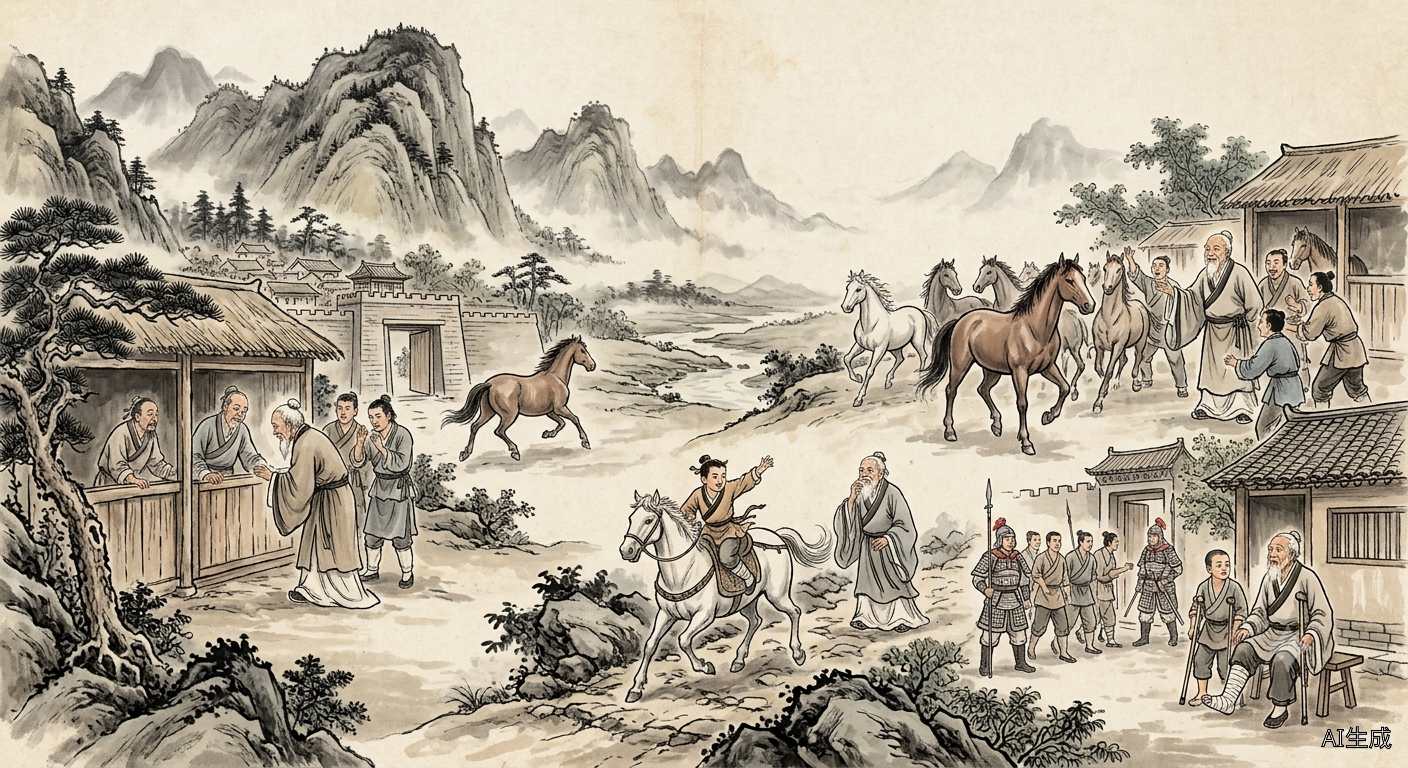
这位老人住在靠近边塞的地方,家里养了一匹好马。有一天,这匹马不知怎么的挣脱了缰绳,跑到边塞外面去了,怎么找也找不回来。邻居们都替他惋惜,纷纷上门安慰他,可老人却一点也不难过,反而说:"马丢了,怎么就知道不是件好事呢?"大家听了都觉得奇怪,心想马丢了明明是坏事,哪里会是好事。
This old man lived near the border, and his family kept a fine horse. One day, the horse somehow slipped its rope and ran off beyond the border, and no matter how hard they searched, they couldn't find it. The neighbors all felt sorry for him and came to offer comfort, but the old man wasn't upset at all, instead he said, "My horse ran off, but how do we know this isn't actually a good thing?" Everyone thought this was strange, they figured losing a horse was clearly bad luck, how could it possibly be good?
📌 边塞 (biānsài) = frontier
🐦
那后来呢?大家说的对吗?
So what happened next? Were the neighbors right?
🐦 小喜好奇地问……
🐦‍⬛
过了几个月,谁也没想到,那匹跑丢的马竟然自己跑回来了,身边还带着一匹边塞外的骏马。邻居们这下都赶来道贺,都说老人家里凭空多了一匹好马,真是好事。可老人却又摇摇头说:"家里多了一匹马,怎么就知道不是件坏事呢?"大家听了更觉得奇怪了,明明是好事,怎么又说不定是坏事。
A few months later, to everyone's surprise, the horse that had run off actually came back on its own, and it brought along a fine horse from beyond the border. The neighbors rushed over to congratulate him, saying the old man's family had gained a wonderful horse out of nowhere, what good luck. But the old man just shook his head again and said, "My family gained a horse, but how do we know this isn't actually a bad thing?" Everyone found this even stranger, it was clearly good news, how could it possibly turn out badly?
📌 骏马 (jùnmǎ) = fine horse
🐦
那后来真的发生了什么不好的事吗?
Did something bad actually happen after that?
🐦 小喜忍不住问……
🐦‍⬛
老人的儿子很喜欢骑马,看到家里多了一匹骏马,天天骑着它到处跑。有一天,他从马背上摔了下来,摔断了腿,从此走路都有些不方便。邻居们又来安慰老人,老人却依然平静地说:"腿摔断了,怎么就知道不是件好事呢?"又过了一段时间,边塞发生了战事,村里到了参军年龄的青年男子大多都被征去打仗,好几年杳无音信,日子过得十分艰难。可老人的儿子因为腿脚不便,没有被征去打仗,留在家里陪着父亲,父子俩因此都平平安安地过了下来。
The old man's son loved riding horses, and seeing the fine new horse at home, he rode it everywhere every day. One day, he fell off the horse and broke his leg, and from then on he walked with some difficulty. The neighbors came again to comfort the old man, but he remained just as calm and said, "His leg is broken, but how do we know this isn't actually a good thing?" Some time later, fighting broke out near the border, and most of the young men in the village of conscription age were sent off to fight, with years passing without any word from them, and life became very hard for their families. But the old man's son, because of his bad leg, wasn't sent to fight, and stayed home to care for his father, so father and son both lived through it safely.
📌 参军 (cānjūn) = join the army
🐦‍⬛ 阿鸦说

小喜感叹道:"原来一件事到底是好是坏,真的说不准呀!"阿鸦点点头:"是呀,福和祸常常是连在一起的,谁也没法提前知道一件事最后会带来什么结果。这也是为什么'塞翁失马,焉知非福'这句话,两千多年来一直提醒人们,遇到好事不要太得意,遇到坏事也不要太灰心。"
Magpie sighed, "So whether something is good or bad luck really can't be known for sure!" A-Ya nodded, "That's right. Fortune and misfortune are often connected, and no one can know in advance what a single event will eventually lead to. That's exactly why the saying 'the old man loses his horse, how could we know it wasn't a blessing' has reminded people for over two thousand years not to get too pleased with good luck, nor too discouraged by bad luck."

🎴 塞翁失马词汇卡 · Old Man's Horse Word Cards
🏜️
边塞
biānsài
frontier
老人住在边塞附近。
The old man lived near the frontier.
🐴
骏马
jùnmǎ
fine horse
老人的马带回了一匹骏马。
The old man's horse brought back a fine horse.
😟
惋惜
wǎnxī
to feel sorry for
邻居们都替他惋惜。
The neighbors all felt sorry for him.
🎉
道贺
dàohè
to congratulate
大家都上门道贺。
Everyone came to offer congratulations.
⚔️
参军
cānjūn
join the army
青年男子都被征去参军。
The young men were all conscripted into the army.
🙏
平安
píng'ān
safe and sound
父子俩都平平安安。
Father and son were both safe and sound.
⚖️
得失
déshī
gain and loss
不要太在意一时的得失。
Don't dwell too much on temporary gains and losses.
☯️
福祸
fúhuò
fortune and misfortune
福祸常常是连在一起的。
Fortune and misfortune are often connected.
🐴 小喜学到了 · Fun Facts

"塞翁失马"出自西汉刘安编写的《淮南子·人间训》,"塞"指的是边塞,"翁"是对老人的尊称。这个成语后来常常搭配"焉知非福"一起使用,成为中国人面对得失时最常引用的一句智慧箴言。🐴🏜️

"The old man at the frontier loses his horse" comes from the "Human Affairs" chapter of the "Huainanzi," compiled during the Western Han dynasty by Liu An. "塞" refers to the border frontier, and "翁" is a respectful term for an old man. This idiom is often paired with the phrase "how could we know it wasn't a blessing," and has become one of the most commonly quoted words of wisdom in Chinese culture when facing gain and loss.

🔒 后续内容已锁定 · 付¥3一次解锁全部内容 · 1年有效