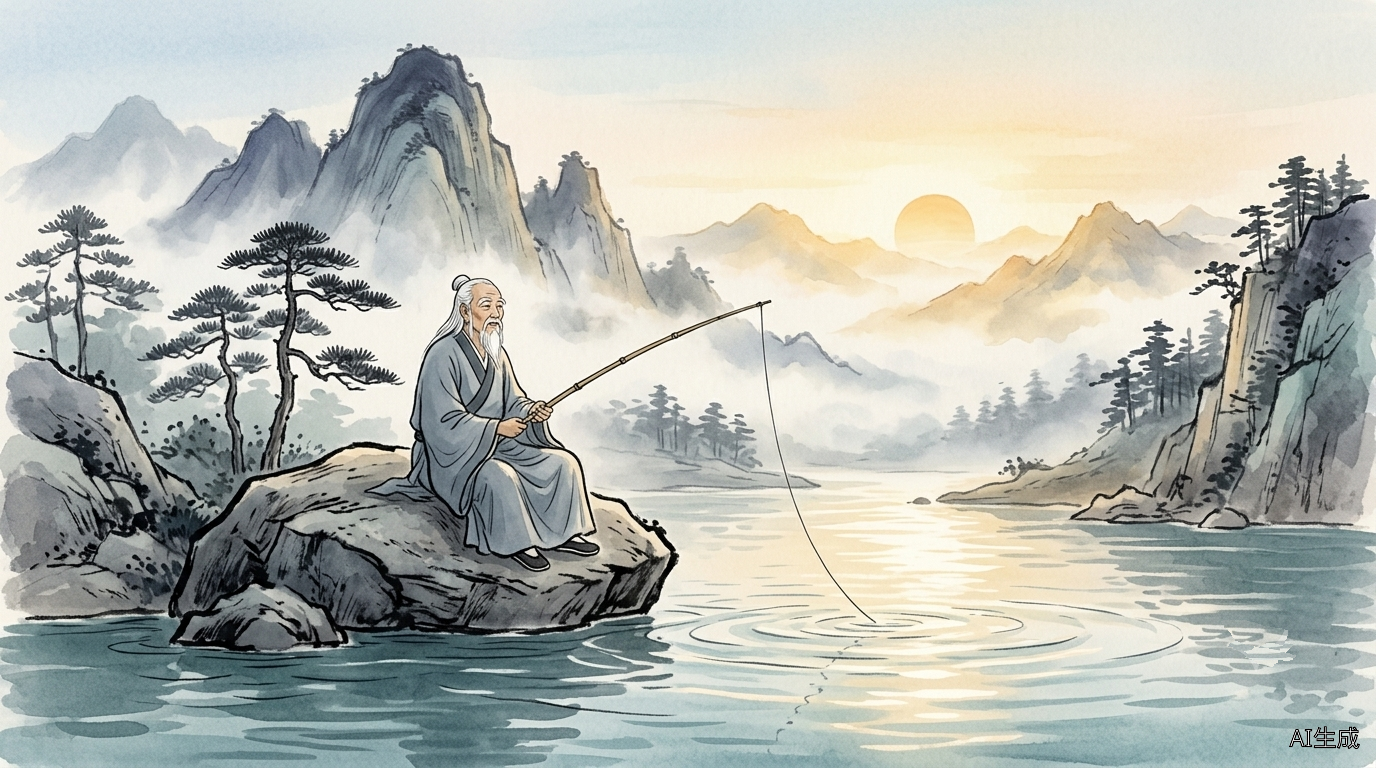
"姜太公钓鱼,愿者上钩",是一句流传了几千年的中国谚语,用来形容一个人做事从不强求,只等真正懂得欣赏他的人主动上门。这句谚语背后,藏着一位老人在渭水边度过的一段特别岁月。
"Jiang the Elder fishes, only those willing take the bait" is a Chinese proverb passed down for thousands of years, describing someone who never forces things, but instead waits for the person who truly appreciates them to come on their own. Behind this proverb lies a special chapter in the life of an old man beside the Wei River.
这位老人名叫姜子牙,是中国历史上非常有智慧的一位谋士,后来辅佐周文王、周武王建立了周朝,被后世尊为"太公"。他垂钓渭水的这段故事,也成了《封神演义》里流传最广的经典片段之一。
This old man was named Jiang Ziya, an extraordinarily wise strategist in Chinese history, who later helped King Wen and King Wu of Zhou establish the Zhou Dynasty, and was honored by later generations as "the Grand Duke." This story of him fishing at the Wei River became one of the most widely told classic episodes in the novel "Investiture of the Gods."
🎣 老人的钓钩离水面三尺高,钩上也没挂鱼饵——
这样真的能钓到鱼吗?
付费解锁完整故事 · 姜子牙渭水垂钓 · 趣味词卡
🔒 后续内容已锁定
一次付费解锁完整故事 · 情景对话 · 趣味词卡 · 1年时效
小喜看到画里一位白发老人独自坐在河边垂钓,神情安详,好奇地问:"阿鸦,这位老爷爷在钓鱼吗?看起来好悠闲呀。"
Magpie saw a painting of a white-haired old man sitting alone by the river fishing, looking calm and unhurried, and asked curiously, "A-Ya, is this grandpa fishing? He looks so at ease."
阿鸦说:"这位老人叫姜子牙,他这样在渭水边钓鱼,其实钓了整整三年,可他的钓钩上,从来没挂过鱼饵。"
A-Ya said, "This old man's name is Jiang Ziya, and he had actually been fishing beside the Wei River like this for three whole years, but his hook never once had any bait on it."
小喜惊讶:"没挂鱼饵?那他到底想钓什么呀?"
Magpie was amazed, "No bait? Then what was he actually trying to catch?"
阿鸦说:"姜子牙年轻时读了很多书,学问很深,可惜一直没有机会施展才华,直到七十多岁,还是一个默默无闻的老人。"
A-Ya said, "When Jiang Ziya was young, he read a great many books and had deep learning, but unfortunately never had the chance to put his talents to use, and even in his seventies, he was still an unknown old man."
小喜追问:"那他为什么要用没有鱼饵的钩子钓鱼呀?"
Magpie pressed on, "So why did he fish with a hook that had no bait?"
阿鸦说:"他不是真的想钓鱼,而是在等一个真正懂得欣赏他才华的人经过,愿意请他出山。"
A-Ya said, "He wasn't really trying to catch fish, he was waiting for someone who would truly appreciate his talent to come by, and invite him to serve."
小喜好奇:"那后来真的有人来找他了吗?"
Magpie was curious, "So did someone actually come looking for him later?"
阿鸦说:"来了,还是一位非常特别的人物。这一次相遇,后来还改变了整个国家的命运,具体是怎么发生的,还得从头讲起。"
A-Ya said, "Yes, and it was someone quite special. This encounter went on to change the fate of an entire kingdom, exactly how it happened, we'll have to start from the beginning."
小喜感叹道:"原来他钓的不是鱼,是一个机会呀!"阿鸦点点头:"是呀,姜子牙等了几十年,从没有因为怀才不遇就放弃自己,这份耐心和眼光,才是这个故事真正想告诉我们的道理。"
Magpie sighed, "So what he was really fishing for wasn't fish, but an opportunity!" A-Ya nodded, "That's right. Jiang Ziya waited for decades, and never gave up on himself just because his talent went unrecognized for so long. That patience and that vision are really what this story wants to teach us."
"姜太公钓鱼,愿者上钩"这句谚语,如今依然被广泛使用,用来形容一个人不强求、只等有缘人主动上门。姜子牙的故事还被写进了明代小说《封神演义》,成为中国神话文学里最经典的人物之一,直到今天,渭水边还留有纪念他的"钓鱼台"古迹,供后人瞻仰。🎣✨
The proverb Jiang the Elder fishes, only those willing take the bait is still widely used today, describing someone who never forces things, but waits for the right person to come on their own. Jiang Ziya's story was also written into the Ming dynasty novel Investiture of the Gods, becoming one of the most classic figures in Chinese mythological literature. To this day, a historic site called the Fishing Terrace still stands beside the Wei River in his memory, visited by people to this day.
支付以下动态金额(基准¥3,浮动±0.5)