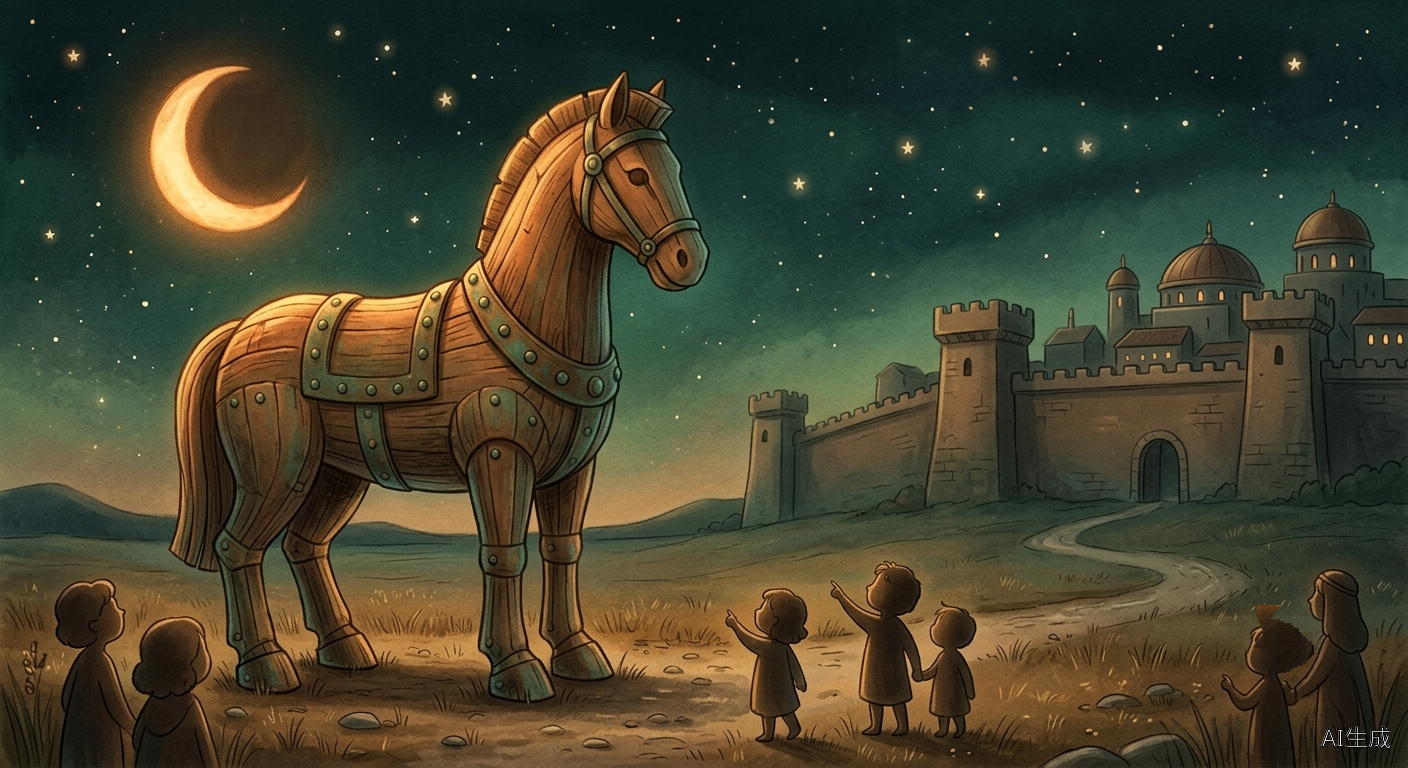
古希腊人为了夺回被特洛伊王子帕里斯带走的海伦,率领大军把特洛伊城整整围困了十年,却怎么也攻不下这座城墙坚固的城市。眼看强攻无望,足智多谋的奥德修斯想出了一条妙计:造一匹巨大的木马,让士兵藏在里面,然后佯装撤军离开,把木马留在城外当作"献给特洛伊的礼物"。
To reclaim Helen, who had been taken away by the Trojan prince Paris, the ancient Greeks besieged the city of Troy for ten long years, yet could never break through its formidable walls. With brute force clearly hopeless, the resourceful Odysseus devised a clever scheme: build a giant wooden horse, hide soldiers inside it, then pretend to retreat and leave the horse outside the city as a "gift to Troy."
特洛伊人为这份"礼物"欢呼雀跃,不顾祭司拉奥孔"小心希腊人的礼物"的警告,硬是把木马拖进了城墙之内。当夜,藏在木马里的希腊士兵悄悄爬出,打开城门,城外的大军一拥而入。从此,"特洛伊木马"这个说法流传至今,用来形容那些看起来人畜无害、实则暗藏危险的东西——就连今天电脑里的"木马病毒",名字也是从这里来的。
The Trojans celebrated this "gift," ignoring the priest Laocoön's warning to "beware of Greeks bearing gifts," and hauled the wooden horse inside the city walls. That night, the Greek soldiers hidden inside quietly climbed out, opened the gates, and the waiting army poured in. Ever since, the phrase "Trojan horse" has been used to describe something that looks harmless but secretly conceals danger — even today's computer "Trojan virus" takes its name from this very story.
🐴 一匹巨大的木马、一份"友善的礼物"——
特洛伊人为什么会心甘情愿把它拖进城?
付费解锁完整故事 · 惊心动魄的攻城之夜 · 趣味词卡
🔒 后续内容已锁定
一次付费解锁完整故事 · 情景对话 · 趣味词卡 · 1年时效
小喜盯着博物馆橱窗里一匹小小的木马雕塑看了很久,好奇地问:"阿鸦,这匹木马雕得好精致呀,是什么故事里的马吗?"
Xiaoxi stared at a small wooden horse statue in the museum window for a long time and asked curiously, "Aya, this wooden horse is carved so beautifully — is it from some story?"
阿鸦看了看雕塑,压低声音说:"这可不是普通的马。它的肚子里,曾经藏着几十名全副武装的希腊士兵——这就是历史上最著名的'木马计'。"
Aya glanced at the statue and lowered his voice: "This is no ordinary horse. Dozens of fully armed Greek soldiers once hid inside its belly — this is the most famous 'Trojan Horse' trick in history."
小喜瞪大眼睛:"肚子里藏着士兵?特洛伊人怎么会没发现?"
Xiaoxi's eyes went wide: "Soldiers hidden inside its belly? How did the Trojans not notice?"
阿鸦说:"因为希腊人假装打了十年仗打累了,撤军回家,还把这匹木马留在城外,说是献给特洛伊人的礼物。"
Aya said, "Because the Greeks pretended to be exhausted after ten years of war and sailed home, leaving the horse outside the city as a supposed gift to the Trojans."
小喜疑惑地问:"那特洛伊人就直接相信了?"
Xiaoxi asked, puzzled, "And the Trojans just believed it, just like that?"
阿鸦说:"也不是所有人都信。有一位祭司拼命警告大家,千万不要相信希腊人的礼物。"
Aya said, "Not everyone believed it. One priest desperately warned everyone never to trust a gift from the Greeks."
小喜追问:"那大家听他的了吗?"
Xiaoxi pressed, "Did they listen to him?"
阿鸦故意卖了个关子:"想知道特洛伊人最后做了什么选择?那就得往下听了。"
Aya deliberately teased, "Want to know what choice the Trojans made in the end? You'll have to keep listening."
小喜感叹道:"原来一份'礼物'背后,可以藏着这么大的危险!"阿鸦点点头:"这就是为什么'特洛伊木马'这个词流传了几千年——它提醒人们,看起来友善无害的东西,背后也可能暗藏危机。就连今天电脑里的'木马病毒',名字也是从这个故事来的。"
Xiaoxi sighed, "So a 'gift' can hide such enormous danger behind it!" Aya nodded, "That's why the phrase 'Trojan Horse' has survived for thousands of years — it reminds people that something that looks friendly and harmless might conceal real danger. Even today's computer 'Trojan virus' gets its name from this very story."
"特洛伊木马"(a Trojan horse)这个说法至今仍在被广泛使用,不仅指历史上的这匹木马,更用来形容任何"看起来友善、实则暗藏危险"的东西。今天电脑里的"木马病毒"(Trojan virus)正是借用了这个典故——它伪装成正常软件,实际上却在偷偷破坏你的电脑。
The phrase "a Trojan horse" is still widely used today, referring not only to the historical horse but to anything that "looks friendly on the surface but secretly conceals danger." Today's computer "Trojan virus" borrows directly from this story — it disguises itself as ordinary software while secretly damaging your computer underneath.
支付以下动态金额(基准¥3,浮动±0.5)