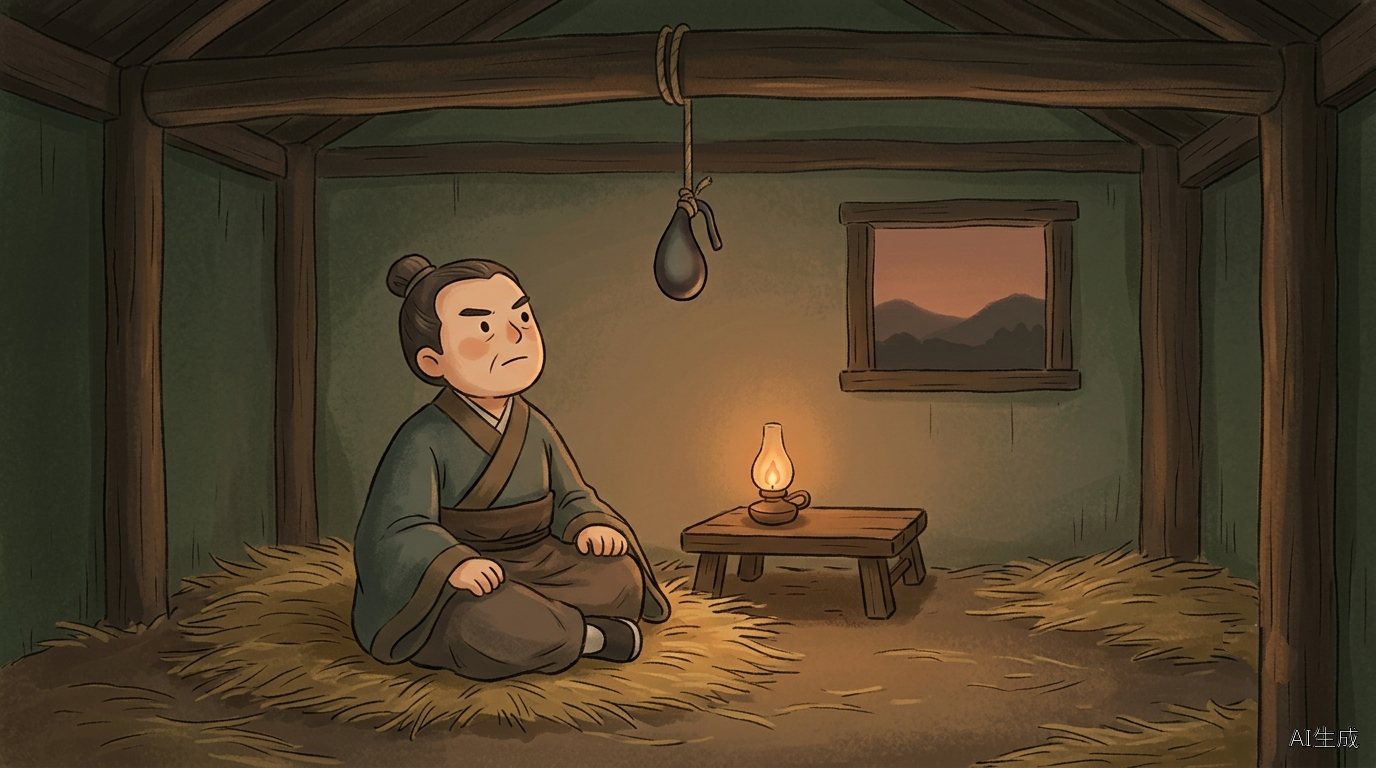
春秋末年,越国被吴国打得大败,越王勾践被迫到吴国给夫差做了三年奴仆,受尽屈辱。回国之后,勾践没有忘记这段耻辱,他不睡柔软的床铺,而是睡在铺着柴草的地方;还在房梁上挂了一颗苦胆,每天吃饭前都要尝一尝那股苦味,提醒自己不能忘记曾经的失败。
At the end of the Spring and Autumn period, the state of Yue suffered a crushing defeat by Wu, and King Goujian of Yue was forced to serve as a servant to King Fuchai of Wu for three years, enduring great humiliation. After returning home, Goujian never forgot this disgrace. He refused to sleep on a soft bed, choosing instead to sleep on a pile of brushwood, and he hung a bitter gall bladder above his seat, tasting its bitterness before every meal to remind himself never to forget his past defeat.
整整十年,勾践一边默默休养生息、发展国力,一边暗中训练军队、积蓄力量,从未松懈过。最终,越国重新强大起来,一举打败了吴国,报了当年的耻辱。"卧薪尝胆"这个成语从此流传下来,用来形容一个人为了达成目标,甘愿忍受艰苦、发奋图强。
For ten full years, Goujian quietly rebuilt his nation's strength while secretly training his army, never once relaxing his resolve. In the end, Yue grew powerful once more and decisively defeated Wu, avenging that old humiliation. The idiom "sleeping on brushwood, tasting gall" has been passed down ever since, used to describe someone who willingly endures hardship and works tirelessly to achieve a goal.
🍶 一位被俘的君王、一颗挂在房梁上的苦胆——
勾践要怎样忍辱负重,等来东山再起的那一天?
付费解锁完整故事 · 十年生聚的坚忍岁月 · 趣味词卡
🔒 后续内容已锁定
一次付费解锁完整故事 · 情景对话 · 趣味词卡 · 1年时效
小喜看着博物馆里一颗风干的苦胆展品,好奇地问:"阿鸦,这是什么呀,为什么要把一颗苦胆挂起来给人看?"
Xiaoxi looked at a dried gall bladder on display in the museum and asked curiously, "Aya, what is this? Why would someone hang up a bitter gall bladder for people to see?"
阿鸦看了看展品,缓缓说道:"这背后是一位越国国君的故事。他曾经战败被俘,在敌国当了三年奴仆,回国后天天尝这颗苦胆,就是为了不忘记那段耻辱。"
Aya looked at the display and said slowly, "Behind this lies the story of a king of Yue. He was once defeated and captured, serving as a servant in an enemy kingdom for three years. After returning home, he tasted this bitter gall bladder every day, just to never forget that humiliation."
小喜倒吸一口气:"当了三年奴仆?那该有多难受呀!"
Xiaoxi gasped, "Three years as a servant? That must have been so hard to bear!"
阿鸦说:"是啊,他要给敌国的君主喂马、打扫马厩,甚至还要忍受各种羞辱,但他一句怨言都没说出口。"
Aya said, "Indeed. He had to feed horses and clean stables for the enemy king, even enduring all kinds of humiliation, yet he never once spoke a word of complaint."
小喜疑惑地问:"那他后来是怎么回到自己国家的呀?"
Xiaoxi asked, puzzled, "So how did he eventually get to return to his own country?"
阿鸦说:"他靠着自己的隐忍和智慧,终于让敌国君主放松了戒心,把他放回了自己的国家。"
Aya said, "Through his patience and wisdom, he eventually lowered the enemy king's guard, and was allowed to return to his own country."
小喜追问:"回去之后,他是不是就可以好好享福了?"
Xiaoxi pressed, "After getting back, could he finally live comfortably?"
阿鸦故意卖了个关子:"恰恰相反,他回国后做的事,比在敌国当奴仆时还要更让人吃惊。想知道详情?那就得往下听了。"
Aya deliberately teased, "Quite the opposite — what he did after returning home was even more astonishing than his time as a servant. Want the details? You'll have to keep listening."
小喜感叹道:"十年啊!他能坚持这么久,真的太不容易了!"阿鸦点点头:"是啊,这就是'卧薪尝胆'这个成语的由来。它提醒我们,遇到挫折和失败并不可怕,可怕的是忘记曾经的教训、失去继续努力的决心。只要肯忍耐、肯坚持,总有机会等来翻身的那一天。"
Xiaoxi sighed, "Ten years! It must have been incredibly hard to persevere for that long!" A-Ya nodded, "Yes, this is where the idiom 'sleeping on brushwood, tasting gall' comes from. It reminds us that setbacks and failures aren't the scary part — what's scary is forgetting the lessons learned and losing the will to keep striving. As long as you're willing to endure and persist, there's always a chance for a turnaround."
"卧薪尝胆"这个成语至今仍在被广泛使用,形容一个人为了达成目标,甘愿忍受艰苦、发奋图强、绝不放弃。它提醒我们:真正的强大,往往来自于面对失败后依然选择坚持的那份决心。
The idiom "sleeping on brushwood, tasting gall" is still widely used today to describe someone who willingly endures hardship and works tirelessly toward a goal without ever giving up. It reminds us that true strength often comes from the determination to keep persevering even after facing defeat.
支付以下动态金额(基准¥3,浮动±0.5)