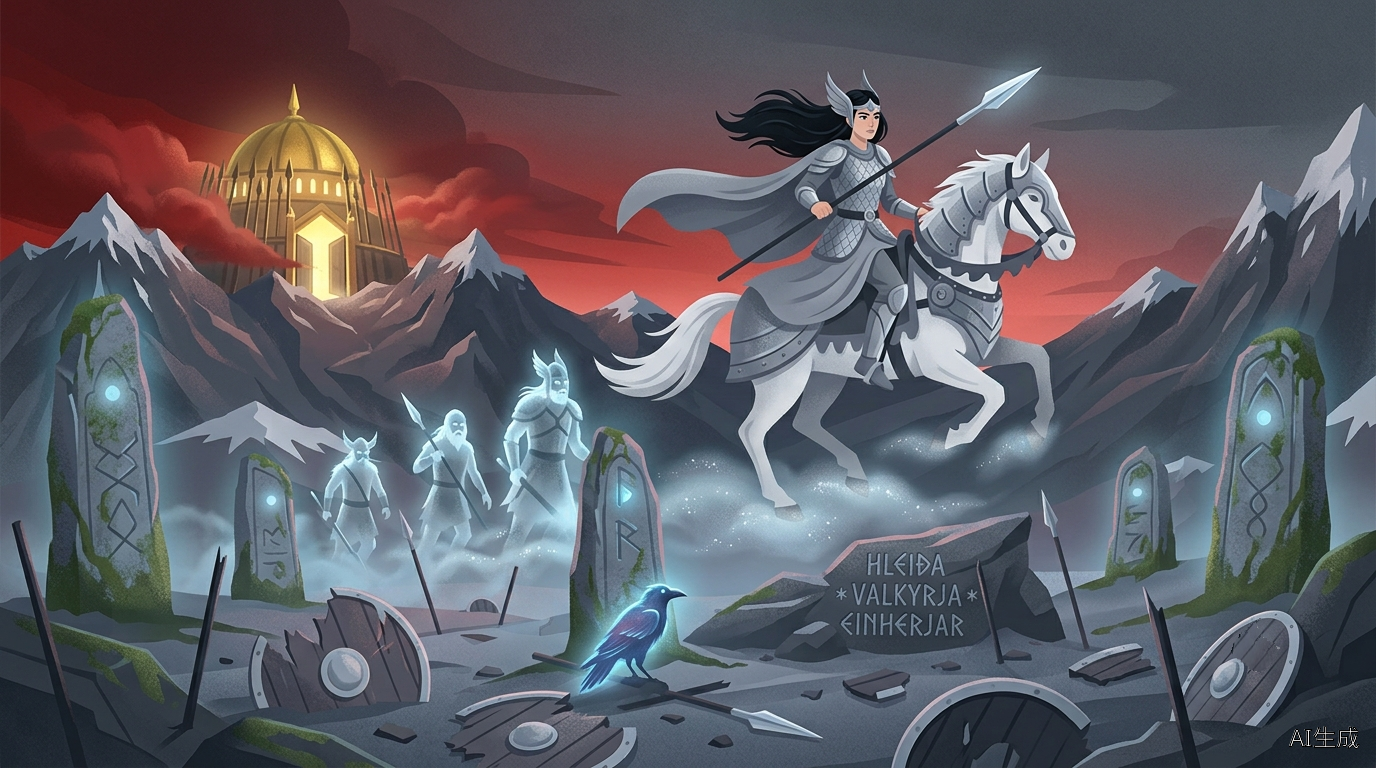
在北欧神话里,瓦尔基里(Valkyrja)是奥丁身边的女武神。她们骑着战马飞越战场,从阵亡的勇士中挑选最勇敢的灵魂,带回奥丁的殿堂瓦尔哈拉(Valhalla)。被选中的战士被称为"英灵战士"(Einherjar),他们在瓦尔哈拉里日日操练、宴饮,为末日之战诸神黄昏做准备。
In Norse mythology, the Valkyries are Odin's warrior maidens. Riding across battlefields on winged horses, they choose the bravest souls among the fallen and carry them to Valhalla, Odin's great hall. Those chosen are called the Einherjar, warriors who feast and train each day, preparing for the final battle of Ragnarök.
瓦尔基里不只是奥丁的使者,她们本身就是战场意志的化身。传说只要瓦尔基里出现在天空,那场战斗的结局,就已经被她们悄悄看穿了。她们决定谁将倒下、谁将挺立到最后,也决定谁能带着荣耀走进瓦尔哈拉的大门。
The Valkyries were more than Odin's messengers, they were the embodiment of the battlefield's own will. Legend held that once a Valkyrie appeared in the sky, the outcome of that battle had already been quietly foreseen. They decided who would fall and who would stand until the end, and who would walk through Valhalla's gates with glory.
⚔️ 天空中传来阵阵马蹄声,一位身披战甲的女武神从云层俯冲而下——她要带走的,究竟是谁?
付费解锁完整故事 · 瓦尔哈拉的秘密 · 趣味词卡
🔒 后续内容已锁定
一次付费解锁完整故事 · 情景对话 · 趣味词卡 · 1年时效
小喜盯着博物馆展柜里一幅古老的挂毯,上面绣着一位身披战甲、骑着飞马的女子。她好奇地问:"阿鸦,这个女子是谁呀?她看起来好威风。"
Xiaoxi stared at an ancient tapestry in the museum display case, embroidered with a woman in battle armor riding a flying horse. She asked curiously, "Aya, who is this woman? She looks so powerful."
阿鸦看了看挂毯,缓缓说道:"她叫瓦尔基里,是北欧神话里奥丁身边的女武神。传说她们会飞越战场,从阵亡的勇士中挑选最勇敢的灵魂,带回奥丁的殿堂。"
Aya looked at the tapestry and said slowly, "She's called a Valkyrie, one of Odin's warrior maidens in Norse mythology. Legend says they fly across battlefields, choosing the bravest souls among the fallen and carrying them back to Odin's great hall."
小喜倒吸一口气:"战场那么可怕,她们不害怕吗?"
Xiaoxi gasped, "Battlefields are so terrifying, aren't they afraid?"
阿鸦说:"瓦尔基里不是普通的战士,她们本身就是战场意志的化身。传说只要她们出现在天空,那场战斗的结局,就已经注定了。"
Aya said, "Valkyries aren't ordinary warriors. They're said to embody the will of the battlefield itself. Legend has it that once a Valkyrie appears in the sky, the outcome of that battle is already decided."
小喜疑惑地问:"那些被选中的勇士,后来去哪儿了呀?"
Xiaoxi asked, puzzled, "So where did the chosen warriors go afterward?"
阿鸦说:"他们被带去了瓦尔哈拉——奥丁的殿堂。那里金光闪闪,屋顶据说是用战士的盾牌铺成的。"
Aya said, "They were taken to Valhalla, Odin's great hall. It shines with golden light, and its roof is said to be made of warriors' shields."
小喜追问:"在那里,他们是不是就可以永远休息了?"
Xiaoxi pressed, "So could they finally rest there forever?"
阿鸦故意卖了个关子:"恰恰相反,他们在瓦尔哈拉里过的日子,比在人间战场还要忙碌。想知道详情?那就得往下听了。"
Aya deliberately teased, "Quite the opposite, their days in Valhalla were even busier than on the mortal battlefield. Want the details? You'll have to keep listening."
小喜感叹道:"她们又是战士的引路人,又是命运的编织者,真的好神秘!"阿鸦点点头:"是啊,这就是瓦尔基里的传说。它提醒我们,勇气从来不是没有恐惧,而是明知战场凶险,依然选择挺身而出——因为总有人,会记得你的勇敢。"
Xiaoxi sighed, "They're both guides for warriors and weavers of fate, that's so mysterious!" A-Ya nodded, "Yes, that's the legend of the Valkyries. It reminds us that courage was never about feeling no fear, it's about stepping forward even when you know the battlefield is dangerous, because someone will always remember your bravery."
在古北欧语中,"瓦尔基里"(Valkyrja)的字面意思是"挑选阵亡者的人"。历史学家发现,这个词最早出现在九世纪的古北欧诗歌中,比我们熟悉的《诗体埃达》成书还要早上百年。
In Old Norse, the word Valkyrja literally means "chooser of the slain." Historians have traced the term back to ninth-century Old Norse poetry, predating the famous Poetic Edda by roughly a century.
支付以下动态金额(基准¥3,浮动±0.5)