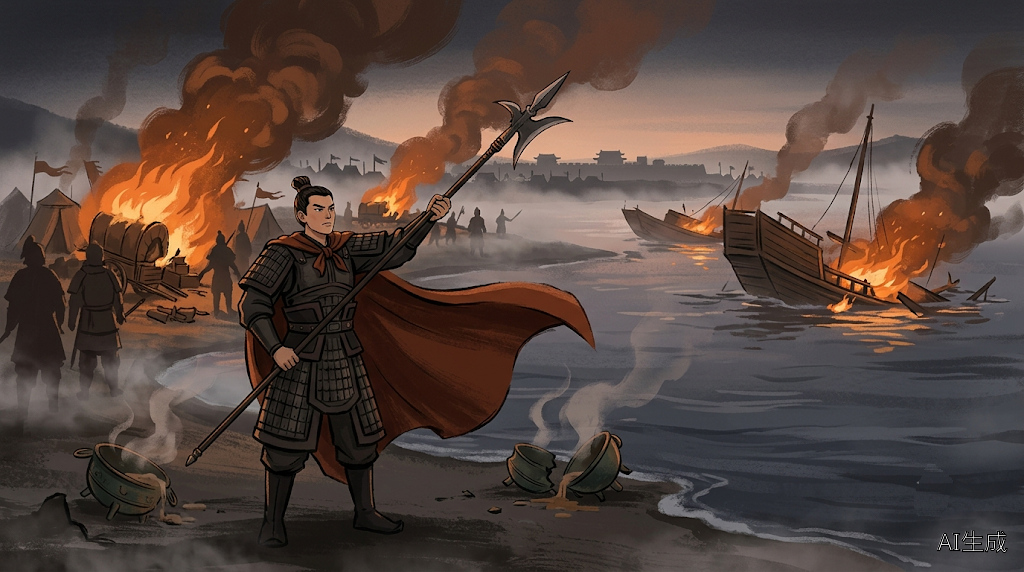
秦朝末年,天下大乱,各路起义军纷纷反抗暴秦统治。秦军主力围攻赵国都城巨鹿,形势危急。楚国将领项羽奉命率军渡河救援,可当时各路诸侯援军都畏惧秦军强大,纷纷按兵不动,只在营中远远观望,没人敢率先出战。
Near the end of the Qin dynasty, the empire fell into chaos as rebel armies rose up against Qin's harsh rule. The main Qin forces laid siege to Julu, the capital of the state of Zhao, and the situation grew dire. Xiang Yu, a general from the state of Chu, was ordered to lead his troops across the river to relieve the siege. But the other allied armies, fearing the might of the Qin forces, held back and watched from a distance, none daring to strike first.
面对这份人人皆有的犹豫和侥幸心理,项羽做出了一个震惊全军的决定——他要用一种谁都无法反悔的方式,让全军只剩下一条路可走:拼死一战,赢下这场硬仗。
Facing this hesitation and wishful thinking shared by nearly everyone, Xiang Yu made a decision that stunned the entire army, he would use a method that left no room for regret, leaving his troops with only one path forward: fight to the death and win this decisive battle.
🔥 项羽下令砸锅凿船,断绝全军退路——这场豪赌,他赢了吗?
付费解锁完整故事 · 巨鹿之战全过程 · 趣味词卡
🔒 后续内容已锁定
一次付费解锁完整故事 · 情景对话 · 趣味词卡 · 1年时效
小喜盯着博物馆里一口打碎的青铜炊釜,好奇地问:"阿鸦,这口锅好好的,为什么会被砸成这样?"
Xiaoxi stared at a shattered bronze cooking cauldron in the museum and asked curiously, "Aya, why would a perfectly good cauldron be smashed like this?"
阿鸦看了看那口破釜,缓缓说道:"这可不是意外损坏——是有人故意把它砸碎的,而且砸碎它的人,还顺手把自己的船也一起凿沉了。"小喜瞪大了眼睛:"把船凿沉?那大家还怎么回去呀?"阿鸦说:"这正是他要的效果。这位将领叫项羽,他带兵渡过黄河去救援被围困的盟友,可对面秦军兵力强大,麾下将士人人心里打鼓,不少人悄悄盘算着,万一打不过,还能坐船撤退。项羽看出了这份犹豫。"
Aya looked at the shattered cauldron and said slowly, "This wasn't an accident, someone smashed it on purpose, and that same person also sank his own boats." Xiaoxi's eyes widened. "Sank the boats? Then how would everyone get back?" Aya said, "That was exactly the point. This general was named Xiang Yu. He led troops across the Yellow River to relieve a besieged ally, but the Qin forces on the other side were far stronger, and every soldier under him secretly feared the fight, quietly planning that if it went badly, they could always retreat by boat. Xiang Yu noticed this hesitation."
小喜追问:"项羽为什么要这么做?直接带兵打不就行了吗?"
Xiaoxi pressed, "Why would he do that? Couldn't he just lead the troops into battle directly?"
阿鸦说:"秦军是当时天下最强的军队之一,兵力远远超过楚军。项羽渡河之前,麾下将士心里其实都很清楚这一点,不少人打的算盘是——万一打不过,还能坐船撤回去。"
Aya said, "The Qin army was one of the strongest in the empire at the time, vastly outnumbering Chu's forces. Before crossing the river, Xiang Yu's soldiers were well aware of this, and many secretly planned that if the battle went badly, they could always retreat by boat."
小喜好奇地问:"那项羽发现了这份心思之后,做了什么?"
Xiaoxi asked curiously, "So what did Xiang Yu do once he noticed this mindset?"
阿鸦说:"他做了一件让全军目瞪口呆的事——渡河之后,立刻下令把所有的船只全部凿沉。"
Aya said, "He did something that left the entire army stunned, right after crossing the river, he ordered every single boat to be sunk."
小喜倒吸一口气:"凿沉了船,那大家岂不是连退路都没有了?"
Xiaoxi gasped, "If the boats were sunk, wouldn't everyone be left with no way to retreat?"
阿鸦故意卖了个关子:"这只是第一步。他接下来做的事,比凿沉船只更让人震惊。想知道详情?那就得往下听了。"
Aya deliberately teased, "That was only the first step. What he did next was even more shocking than sinking the boats. Want the details? You'll have to keep listening."
小喜感叹道:"原来砸锅凿船不是冲动,是提前算好的决心。"阿鸦点点头:"是啊,这就是'破釜沉舟'这个成语的由来。它告诉我们,有时候留一条退路,反而会让人心存侥幸、不肯拼尽全力;斩断退路,看似冒险,却能激发出最大的决心和潜力。"
Xiaoxi sighed, "So smashing the cauldrons and sinking the boats wasn't impulsive, it was a calculated act of resolve." A-Ya nodded, "Yes, this is where the idiom 'breaking the cauldrons and sinking the boats' comes from. It teaches us that leaving a way back can sometimes make people cling to wishful thinking instead of giving their all, while cutting off retreat, though it looks risky, can unlock the greatest resolve and potential a person has."
这场载入史册的战役叫"巨鹿之战",是中国古代著名的以少胜多战役之一。史书记载,楚军渡河后连续打了九次仗,才彻底击溃秦军主力,"破釜沉舟"也从此成为中文里形容"下定决心、不留退路"最经典的成语之一,至今仍在日常生活中被广泛使用。
This battle, recorded in history as the Battle of Julu, is one of ancient China's most famous examples of a smaller force defeating a much larger one. Historical records state that Chu's forces fought nine consecutive battles after crossing the river before finally crushing the main Qin army. "Breaking the cauldrons and sinking the boats" has since become one of the most classic Chinese idioms for resolving to succeed with no way back, and it remains widely used in everyday language today.
支付以下动态金额(基准¥3,浮动±0.5)