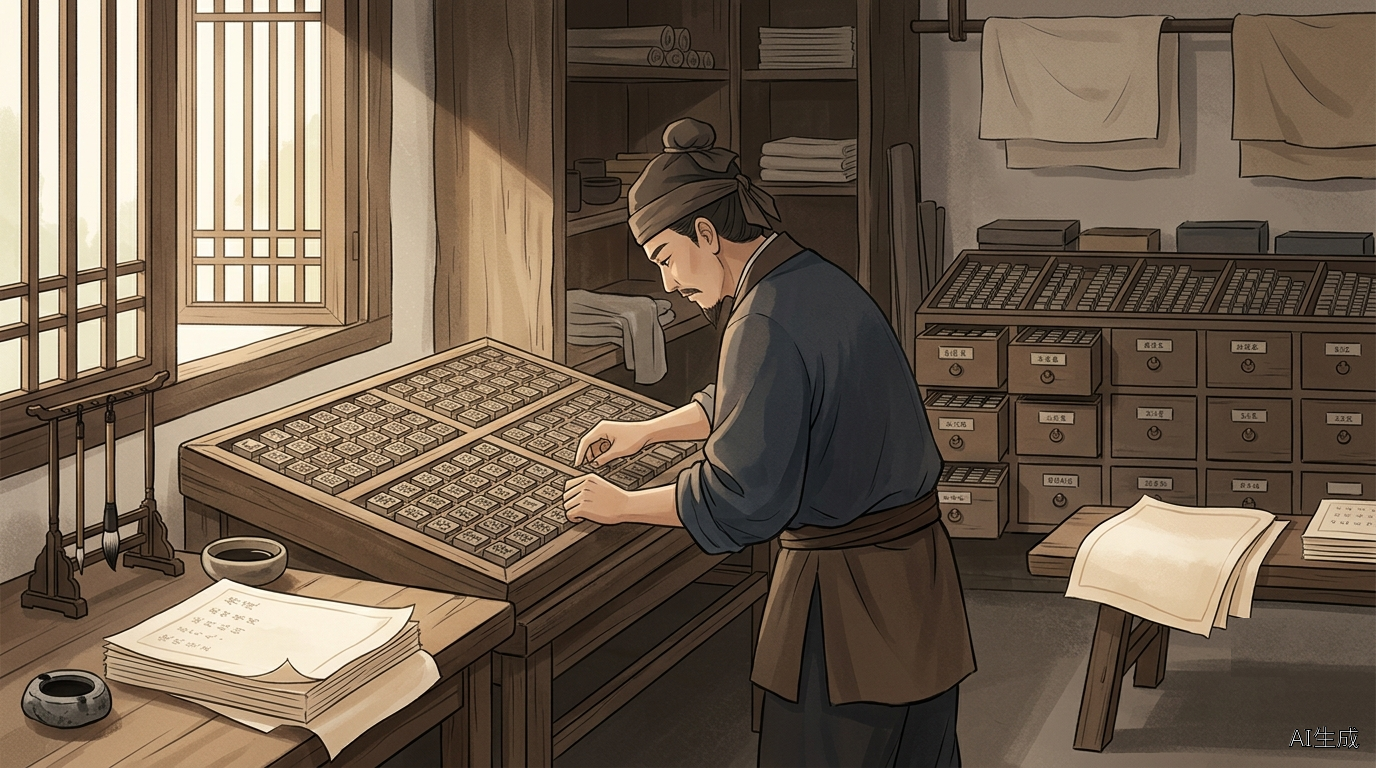
北宋年间,中国的印刷术已经普遍使用雕版印刷——工匠要把整整一页文字,一笔一划刻在一块木板上,刻错一个字,往往就得整块木板重新雕刻。一位名叫毕昇的普通工匠,在长年的印刷工作中,萌生了一个大胆的想法:能不能把每一个字都刻成独立的小活块,需要哪几个字,就挑出来拼在一起,用完之后再拆开,留着下次接着用?
During the Northern Song dynasty, Chinese printing relied on woodblock printing, where an entire page of text had to be carved by hand onto a single wooden block. A single mistake often meant recarving the whole block. Bi Sheng, an ordinary craftsman, came up with a bold idea after years of printing work: what if each character were carved as its own small individual piece, so that whichever characters were needed could be picked out and arranged together, then taken apart afterward and reused the next time?
这个诞生于1040年前后的想法,比欧洲古腾堡的活字印刷机整整早了约四百年。一位天天在雕版房里干活的普通工匠,就这样悄悄改写了印刷的历史。
This idea, born around the year 1040, predated Gutenberg's movable-type press in Europe by roughly four hundred years. An ordinary craftsman who worked in the woodblock workshop every day quietly rewrote the history of printing.
🀄 一格格摆得整整齐齐的小陶块,藏着让中国印刷术领先世界四百年的秘密
付费解锁完整故事 · 活字印刷术的诞生 · 趣味词卡
🔒 后续内容已锁定
一次付费解锁完整故事 · 情景对话 · 趣味词卡 · 1年时效
小喜看着博物馆展柜里一格一格摆得整整齐齐的小陶块,好奇地问:"阿鸦,这些小方块看起来像麻将,是干什么用的呀?"
Xiaoxi looked at rows of tiny clay blocks neatly arranged in the museum display case and asked curiously, "Aya, these little blocks look like mahjong tiles, what are they for?"
阿鸦笑着说:"猜错啦,这些可不是用来打牌的——它们比麻将年长得多,而且藏着一个让中国印刷术领先世界几百年的秘密。"小喜瞪大眼睛:"领先世界几百年?这么厉害?"阿鸦说:"北宋时候,印书要靠雕版——工匠得把一整页字,一笔一划刻在一整块木板上,费时费力,刻错一个字就得整块重刻。有位叫毕昇的工匠每天都在做这份苦活,他心里琢磨:为什么非要把字刻死在一块板上不可呢?"
Aya laughed. "Wrong guess, these weren't for playing games, they're much older than mahjong, and they hold a secret that put Chinese printing centuries ahead of the world." Xiaoxi's eyes widened. "Centuries ahead? That impressive?" Aya said, "During the Northern Song dynasty, printing relied on woodblocks, craftsmen had to carve an entire page of text onto a single wooden block, stroke by stroke, exhausting work, and a single mistake meant recarving the whole thing. A craftsman named Bi Sheng did this grueling work every day, and he kept wondering: why did the characters have to be permanently carved onto one block?"
小喜追问:"雕版印刷这么麻烦,那有没有更好的办法呀?"
Xiaoxi pressed, "If woodblock printing was so troublesome, was there a better way?"
阿鸦说:"毕昇每天在雕版房里干活,看着师傅们一刀一刀地刻字,心里始终有个问题挥之不去——为什么非要把整页字刻死在一块板子上不可呢?"
Aya said, "Bi Sheng worked in the woodblock workshop every day, watching the craftsmen carve characters stroke by stroke, and one question kept nagging at him: why did an entire page of text have to be permanently carved onto a single block?"
小喜好奇地问:"那他有没有想到什么办法?"
Xiaoxi asked curiously, "So did he come up with an idea?"
阿鸦说:"他反复琢磨,最终想到了一个大胆的主意——如果把每一个字都刻成一个独立的小方块,是不是就能像拼图一样,需要哪个字就挑出来用,用完还能拆开留着下次接着排?"
Aya said, "After much thought, he finally landed on a bold idea, what if every single character were carved as its own small independent block? Then, like puzzle pieces, you could pick out whichever characters were needed, and take them apart afterward to reuse next time."
小喜追问:"那他真的做出来了吗?用什么材料做的?"
Xiaoxi pressed, "Did he actually make it? What material did he use?"
阿鸦故意卖了个关子:"他用了一种谁都想不到的材料,还想出了一套巧妙的固定和拆卸办法。想知道具体怎么做的?那就得往下听了。"
Aya deliberately teased, "He used a material no one would have expected, and came up with a clever way to fix the type in place and take it apart again. Want to know exactly how? You'll have to keep listening."
小喜感叹道:"原来毕昇比古腾堡还早了四百年!"阿鸦点点头:"是啊,这提醒我们,伟大的想法常常诞生在最不起眼的日常劳作里——毕昇不过是个天天刻版的普通工匠,却因为一个'为什么非要这样'的疑问,悄悄改写了印刷的历史。"
Xiaoxi sighed, "So Bi Sheng was four hundred years ahead of Gutenberg!" A-Ya nodded, "Yes, it reminds us that great ideas are often born out of the most ordinary daily labor, Bi Sheng was just an ordinary craftsman carving woodblocks day after day, yet a simple question of 'why does it have to be this way' quietly rewrote the history of printing."
毕昇的活字印刷术记载于北宋科学家沈括所著的《梦溪笔谈》,是目前已知关于活字印刷最早、最详细的文字记录。虽然毕昇的发明比古腾堡早了约四百年,但由于汉字数量庞大(常用字就有几千个),活字排版的效率优势在中文语境下不如拼音文字明显,这也是活字印刷在中国没有像在欧洲那样迅速取代雕版的原因之一。
Bi Sheng's movable type printing is recorded in "Dream Pool Essays," written by the Song dynasty scientist Shen Kuo, and it remains the earliest and most detailed written account of movable type known today. Although Bi Sheng's invention predated Gutenberg's by roughly four hundred years, the sheer number of Chinese characters, thousands in common use, meant movable type's efficiency advantage was less pronounced than with alphabetic writing systems, one reason it did not replace woodblock printing in China as quickly as it did in Europe.
支付以下动态金额(基准¥3,浮动±0.5)