← 返回花园首页
📖 故事屋 📚 阿鸦小喜绘本馆 🎭 表情包
象头神格涅什的由来
The Origin of Ganesha
🐘 🪷 阿鸦和小喜
阿鸦 小喜
📜 文化小知识

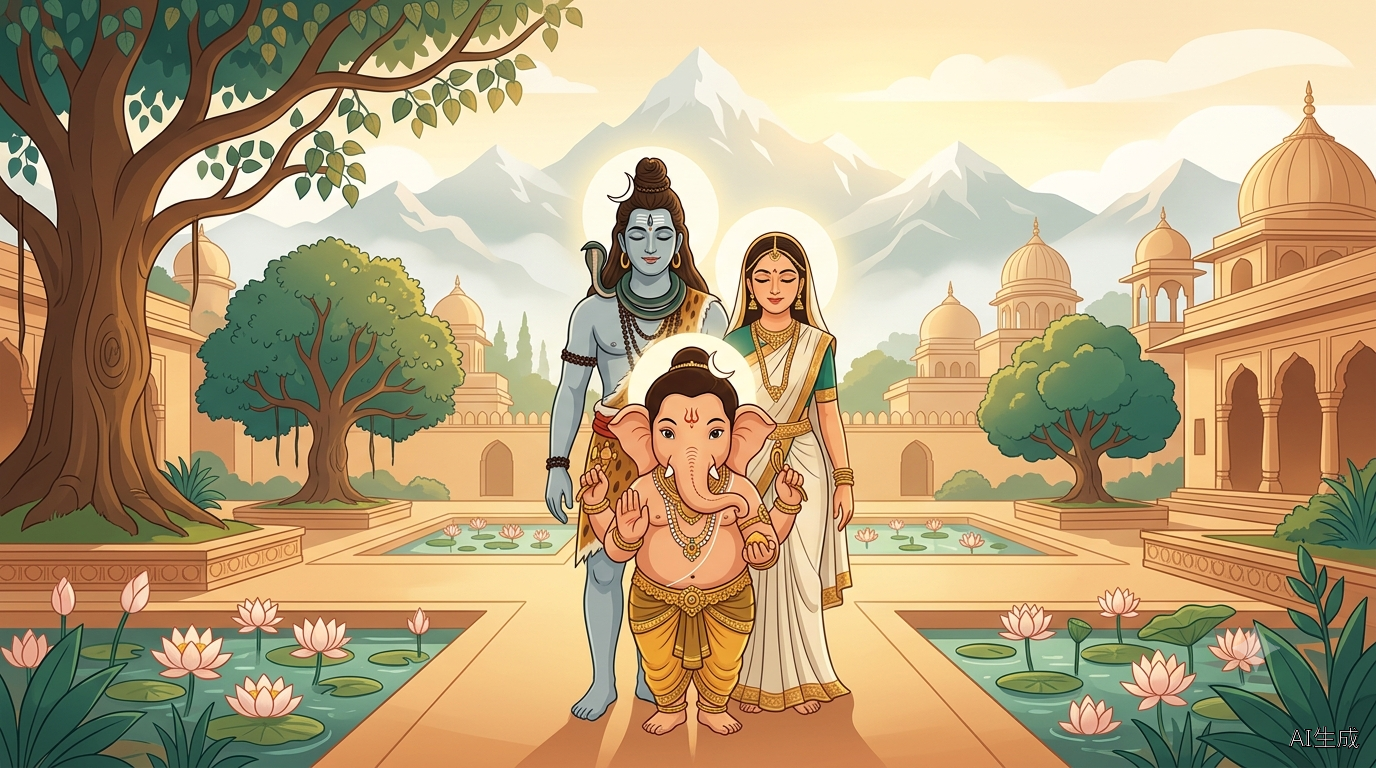
在印度神话里,格涅什是最受喜爱的神祇之一,他有着圆润可爱的象头,被尊为"智慧之神"与"扫除障碍之神",每逢开始新的事业、庆典或旅程,人们都会最先向他祈福。可是很少有人知道,格涅什最初的诞生,其实经历了一场意外的波折。

In Hindu mythology, Ganesha is one of the most beloved deities, known for his gentle, round elephant head. He is revered as the "God of Wisdom" and the "Remover of Obstacles," and people traditionally pray to him first before beginning any new venture, celebration, or journey. Yet few know that Ganesha's very first appearance came about through an unexpected twist of events.

传说中,女神帕尔瓦蒂用檀香糊捏出了一个孩子的形象,并赋予了他生命,让他在自己沐浴时守在门外,谁都不许进入。恰逢此时,她的丈夫湿婆神从远方归来,眼前这个从未见过的孩子却坚决拦下了他。一场彼此都不了解对方身份的误会,就这样悄悄发生了。

According to legend, the goddess Parvati shaped a child from sandalwood paste and breathed life into him, instructing him to guard the door while she bathed and let no one enter. Just then, her husband Shiva returned from a distant journey, and this child, whom he had never seen before, firmly refused to let him pass. A misunderstanding quietly unfolded, as neither recognized who the other truly was.

(苹果收听最佳 · 其他手机请用 Chrome 浏览器)

🐘 一场谁都没想到的误会,让这位神明获得了一颗大象的头
付费解锁完整故事 · 智慧之神的诞生 · 趣味词卡

一次解锁 · 1年有效 · 支付宝/微信/PayPal
📚 故事系列
  • 🔥 湿婆的坦达瓦舞点击进入
  • 🐘 象头神格涅什的由来本期 · NOW
  • 🏹 罗摩救悉多点击进入
  • 🪷 哪吒莲花化身点击进入
  • 🎭 真假美猴王点击进入
✨ 每期包含
📖
双语故事
💬
情景对话
🎴
词汇卡片
🔊
语音朗读
🐘 第86期:象头神格涅什的由来
象头神格涅什的由来

🔒 后续内容已锁定
一次付费解锁完整故事 · 情景对话 · 趣味词卡 · 1年时效

小喜看着博物馆里一尊圆润可爱的象头神像,好奇地问:"阿鸦,这位神明怎么长着大象的头呀?他本来就是这个样子的吗?"

Xiaoxi looked at a round, gentle elephant-headed statue in the museum and asked curiously, "Aya, why does this god have an elephant's head? Was he always like this?"

(苹果收听最佳 · 其他手机请用 Chrome 浏览器)

阿鸦笑着说:"这可不是他一开始的样子——这背后藏着一个既有点意外、又充满温情的故事。他叫格涅什,是印度神话里最受喜爱的神祇之一,可他最初诞生的时候,还发生过一场谁都没想到的误会。"

Aya smiled and said, "That wasn't how he looked at first, there's a story behind it that's both a bit unexpected and full of warmth. His name is Ganesha, one of the most beloved deities in Hindu mythology, but when he was first created, an unexpected misunderstanding occurred."

小喜追问:"那误会是怎么发生的呀?"

Xiaoxi pressed, "So how did this misunderstanding come about?"

阿鸦说:"这个误会带来的后果,比你想象的严重得多。不过别担心,故事的结局其实非常温暖。"

Aya said, "The consequences of this misunderstanding were more serious than you might expect. But don't worry, the ending of this story is actually very heartwarming."

小喜好奇地问:"帕尔瓦蒂发现之后是什么反应呀?"

Xiaoxi asked curiously, "How did Parvati react when she found out?"

阿鸦说:"她非常悲伤,几乎无法接受眼前发生的一切。湿婆神也意识到自己闯下了大祸,当场就下定决心,一定要想办法补救。"

Aya said, "She was deeply grieved, almost unable to accept what had happened. Shiva, too, realized the terrible mistake he had made, and resolved on the spot to find a way to make things right."

小喜追问:"那湿婆神最后是怎么解决的呀?"

Xiaoxi pressed, "So how did Shiva finally solve it?"

阿鸦故意卖了个关子:"他想出了一个谁都没想到的办法,也正是因为这个办法,才有了我们今天看到的这副模样。想知道是什么办法吗?那就得往下听了。"

Aya deliberately teased, "He came up with a solution no one would have expected, and it's precisely because of this solution that we have the appearance we see today. Want to know what it was? You'll have to keep listening."

🐘 阿鸦讲故事 · 象头神格涅什的由来
📍 场景:博物馆的印度神话展厅
🐦
那误会是怎么发生的呀?
So how did this misunderstanding come about?
🐦 小喜好奇地问……
🐦‍⬛
帕尔瓦蒂让这个孩子守在门外,谁都不许放进去。恰好这时湿婆神远行归来,想要进屋去见妻子,可这个孩子并不认识湿婆,坚持不肯让路,两人就这样僵持了起来。
Parvati had told the child to guard the door and let no one in. Just then, Shiva returned from his journey, wanting to go inside to see his wife, but this child did not know Shiva and firmly refused to step aside, and the two came to a standoff.
📌 僵持 (jiāngchí) = to remain at a standoff
🐦
那后来呢?
So what happened next?
🐦 小喜继续追问……
🐦‍⬛
湿婆神一时情急,做出了一个让整件事急转直下的举动——这段过程比较曲折,我们暂且不细说,总之最后的结果是,那个孩子失去了原本的头。帕尔瓦蒂得知后悲痛欲绝,湿婆神也因此深感自责,决心一定要想办法弥补。
In a moment of urgency, Shiva did something that made the whole situation take a sudden turn, the details are somewhat complicated, so let's leave them aside for now, but the outcome was that the child lost his original head. Parvati was devastated when she found out, and Shiva, deeply remorseful, resolved to find a way to make it right.
📌 弥补 (míbǔ) = to make up for, to remedy
🐦
那湿婆神是怎么弥补的呀?
So how did Shiva make up for it?
🐦 小喜好奇地问……
🐦‍⬛
湿婆神承诺一定要让孩子重新活过来,于是派人去寻找第一个遇见的生灵,准备用它的头颅来替代。最先遇到的,正是一头大象。就这样,孩子获得了一颗大象的头颅,重新恢复了生命,从此拥有了这副憨厚可爱的象头模样。湿婆神还将他封为众神之首,是所有新事业、新旅程开始前,最先要祈求祝福的神明。
Shiva promised to bring the child back to life, and sent someone to find the very first living creature they encountered, so its head could take the place of the lost one. The first creature they met happened to be an elephant. And so the child received an elephant's head and was restored to life, gaining the gentle, endearing appearance we know today. Shiva also named him foremost among the gods, the deity to whom people pray first before beginning any new venture or journey.
📌 众神之首 (zhòngshén zhī shǒu) = foremost among the gods
🐦‍⬛ 阿鸦说

小喜感叹道:"一场误会,居然让他变成了这么特别的样子……"阿鸦点点头:"是啊,这提醒我们,有时候意外和波折未必是坏事——格涅什用象头这副独特的模样,反而成了智慧与好运的象征,被无数人喜爱和敬仰了几千年。"
Xiaoxi sighed, "A single misunderstanding turned him into something so special..." A-Ya nodded, "Yes, it reminds us that mishaps and twists of fate aren't necessarily bad things, Ganesha's unique elephant-headed form instead became a symbol of wisdom and good fortune, loved and revered by countless people for thousands of years."

🎴 智慧词汇卡 · Wisdom Word Cards
🐘
格涅什
Génièshí
Ganesha
格涅什是印度神话里最受喜爱的神祇之一。
Ganesha is one of the most beloved deities in Hindu mythology.
👸
帕尔瓦蒂
Pà'ěrwǎdì
Parvati
帕尔瓦蒂用檀香糊捏出了这个孩子。
Parvati shaped this child from sandalwood paste.
🔱
湿婆
Shīpó
Shiva
湿婆神决心一定要弥补自己的过错。
Shiva resolved to make up for his mistake.
🐾
象头
xiàngtóu
elephant head
这位神明拥有一颗圆润可爱的象头。
This deity has a gentle, round elephant head.
💡
智慧之神
zhìhuì zhī shén
God of Wisdom
人们尊称他为智慧之神。
People revere him as the God of Wisdom.
🚧
扫除障碍
sǎochú zhàng'ài
removing obstacles
他被认为能扫除前进路上的障碍。
He is believed to remove obstacles on the path ahead.
👑
众神之首
zhòngshén zhī shǒu
foremost among the gods
湿婆神将他封为众神之首。
Shiva named him foremost among the gods.
🙏
祈福
qífú
to pray for blessings
人们在新的开始前都会向他祈福。
People pray to him for blessings before any new beginning.
🐘 小喜学到了 · Fun Facts

在印度,几乎每一场婚礼、开业典礼、新学期开学,人们都会先向格涅什祈福,认为他能扫除前进路上的一切障碍。他的坐骑是一只小老鼠,象征着即使力量微小,也能穿越最狭窄的缝隙、抵达任何地方。这个反差萌的组合,也是印度神话里最受人喜爱的形象之一。

In India, people traditionally pray to Ganesha first before weddings, business openings, or the start of a new school term, believing he clears away every obstacle on the path ahead. His chosen mount is a small mouse, symbolizing that even something tiny in strength can slip through the narrowest gap and reach anywhere. This charming contrast between the large elephant-headed god and his tiny mount is one of the most beloved images in Hindu mythology.

🔒 后续内容已锁定 · 付¥3一次解锁全部内容 · 1年有效