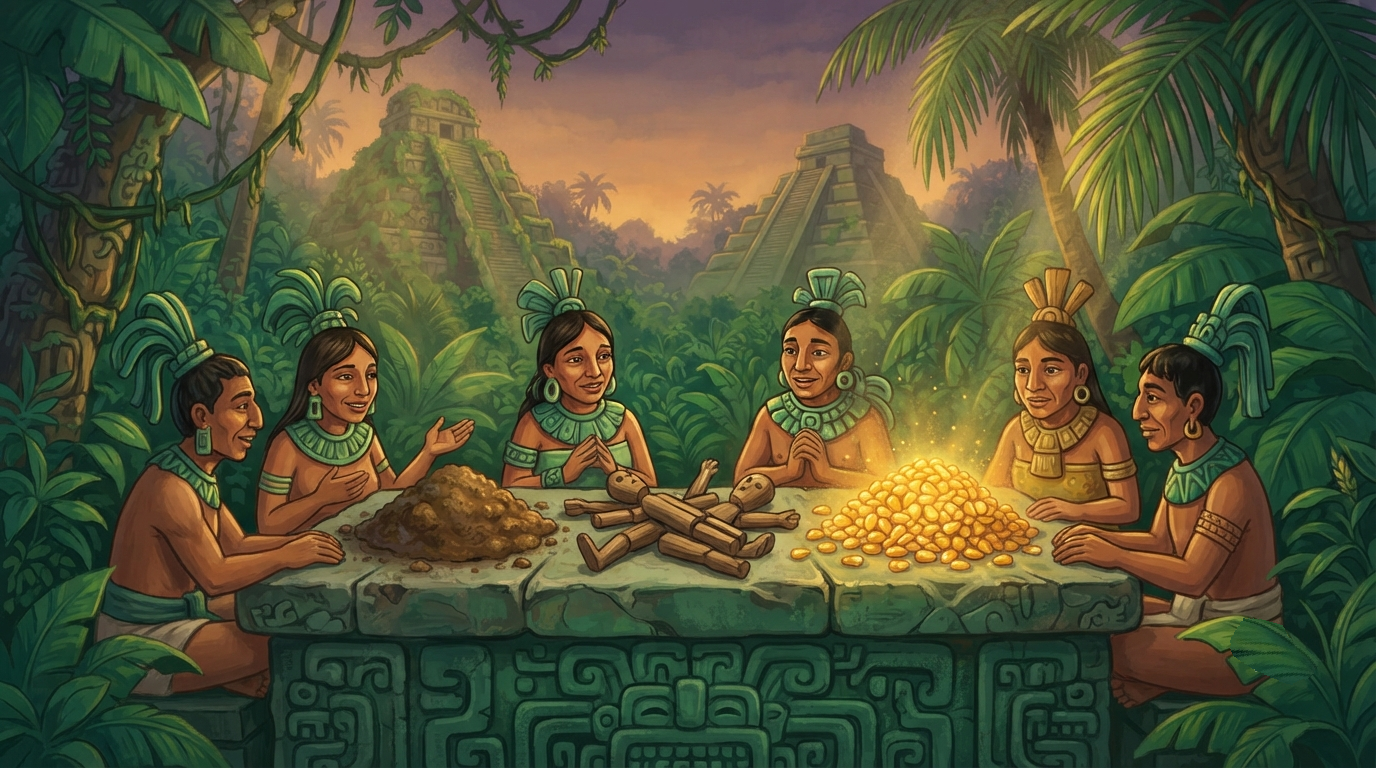
在玛雅文明最重要的圣书《波波尔·乌》里,记载着一个关于"造人"的古老传说。众神最初想要创造出能够开口说话、懂得感恩的生灵,可这件事并没有想象中那么容易——他们尝试了好几次,才终于找到了正确的办法。
In the Popol Vuh, the most important sacred text of the Maya civilization, there is recorded an ancient legend about the creation of humans. The gods first wanted to create beings capable of speaking and expressing gratitude, but this turned out to be far harder than they imagined, they made several attempts before finally finding the right way.
众神先是用泥土捏出了人形,可泥人一遇到水就散开了,根本站不住,也不会说话;接着他们又用木头雕刻出了人形,木头人虽然能走能动,却没有心,感受不到情感,也不懂得感恩神明,于是众神又放弃了这次尝试。直到他们用金黄的玉米面团重新捏塑,才终于创造出了真正意义上的人类。
The gods first shaped figures out of mud, but the mud people dissolved the moment they touched water, unable even to stand, let alone speak. Next, the gods carved figures out of wood, and though these wooden people could walk and move, they had no hearts, they could not feel emotion or express gratitude to the gods, so this attempt too was abandoned. It wasn't until the gods shaped golden maize dough into human form that they finally created true humankind.
🌽 两次失败,一次成功——玛雅神话里最有耐心的造人故事
付费解锁完整故事 · 试错的智慧 · 趣味词卡
🔒 后续内容已锁定
一次付费解锁完整故事 · 情景对话 · 趣味词卡 · 1年时效
小喜看着一幅画,画中几位神明围坐在一起,面前摆着泥土、木头,还有金黄的玉米。她好奇地问:"阿鸦,这些神明在做什么呀?"
Xiaoxi looked at a painting showing several deities seated together, with mud, wood, and golden maize laid out before them. She asked curiously, "Aya, what are these deities doing?"
阿鸦说:"他们在尝试完成一件很不容易的事——创造出真正意义上的人类。这背后,是玛雅神话里一个关于'一次次尝试,直到成功'的故事。"
Aya said, "They're trying to accomplish something far from easy, creating true humankind. Behind this lies a story from Maya mythology about trying again and again until finally succeeding."
小喜追问:"创造人类有这么难吗?"
Xiaoxi pressed, "Is creating humans really that hard?"
阿鸦说:"比你想象的还要难。众神的第一次尝试,很快就失败了。"
Aya said, "Even harder than you'd imagine. The gods' first attempt failed very quickly."
小喜好奇地问:"他们第一次是怎么做的呀?"
Xiaoxi asked curiously, "What did they do the first time?"
阿鸦说:"他们用泥土捏出了人形。不过这个材料,很快就暴露出了一个大问题。"
Aya said, "They shaped figures out of mud. But this material quickly revealed a big problem."
小喜追问:"什么问题呀?"
Xiaoxi pressed, "What problem?"
阿鸦故意卖了个关子:"这个问题严重到,众神不得不重新再来一次——而且他们后来又失败了一回。想知道最后是怎么成功的吗?那就得往下听了。"
Aya deliberately teased, "The problem was so serious that the gods had to start over, and they failed a second time too. Want to know how they finally succeeded? You'll have to keep listening."
小喜感叹道:"原来造人这件事,众神失败了两次才成功……"阿鸦点点头:"是啊,这也是这个故事最打动人的地方——他们没有因为泥人散架、木头人没有心就放弃,而是认真找出问题、换个办法再试一次。真正重要的成果,往往就是这样一点点试出来的。"
Xiaoxi sighed, "So the gods failed twice before finally succeeding at creating humans..." A-Ya nodded, "Exactly, and that's what makes this story so moving, they didn't give up just because the mud people fell apart or the wooden people had no hearts. Instead, they carefully figured out what went wrong and tried again with a different approach. The things that truly matter are often achieved exactly this way, one attempt at a time."
你知道吗?玉米在玛雅文明里不仅仅是神话故事的素材,更是他们真实生活里最重要的粮食作物。玛雅人早在几千年前就开始种植玉米,围绕玉米发展出了完整的历法、农耕技术和祭祀传统,甚至把自己称为"玉米之子"。这份对玉米的珍视,正是《波波尔·乌》里"用玉米造人"这个情节的真实文化根源。
Did you know? Maize wasn't just material for a myth in Maya civilization, it was also the most important food crop in their actual daily lives. The Maya began cultivating maize thousands of years ago, developing an entire calendar system, farming techniques, and ritual traditions around it, even calling themselves "the children of maize." This deep reverence for corn is the real cultural root behind the Popol Vuh's story of humans being created from maize.
支付以下动态金额(基准¥3,浮动±0.5)