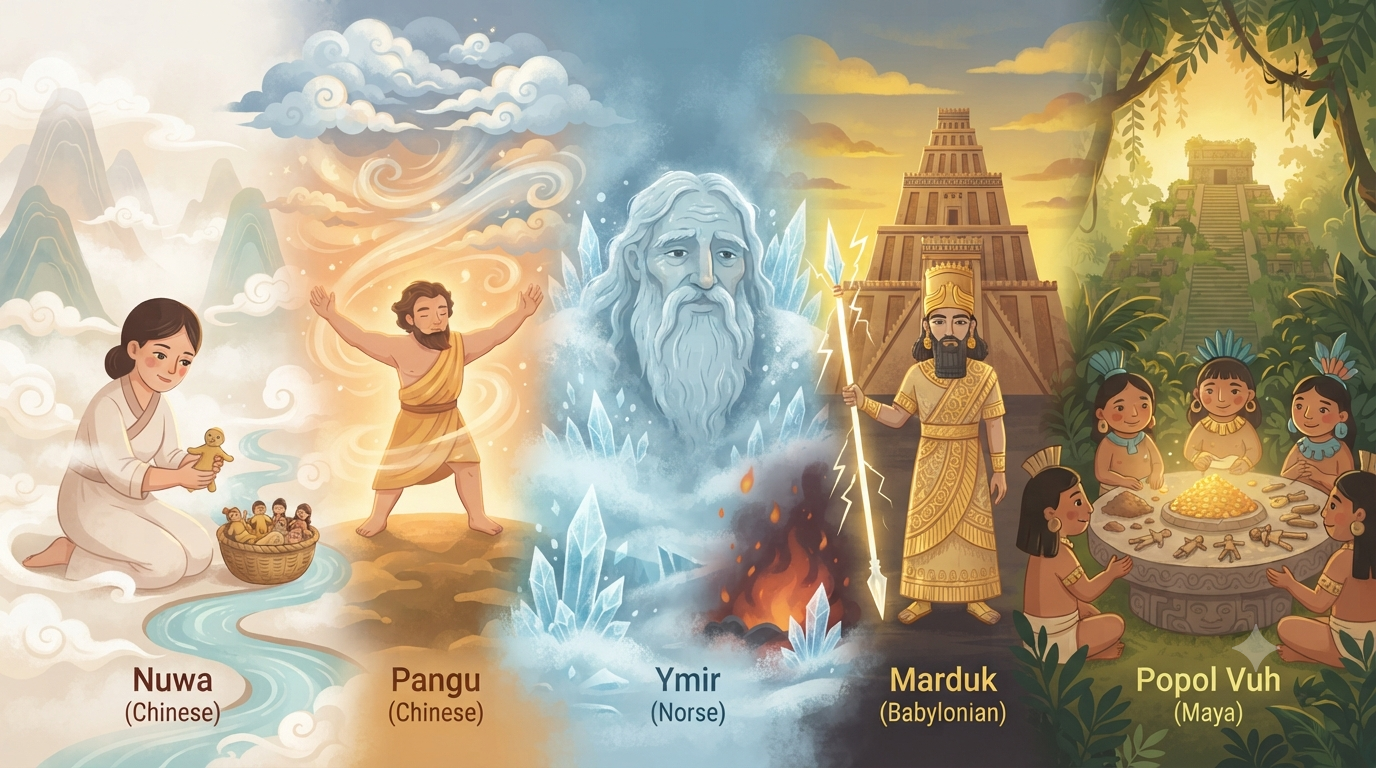
从中国的女娲、盘古,到北欧的尤弥尔,再到两河流域的马尔杜克、玛雅的波波尔·乌——阿鸦和小喜已经一起走过了好几个关于"世界从哪里来""人类从哪里来"的古老传说。这些故事分别诞生在相隔万里、彼此毫无往来的不同文明里,可当它们被放在一起,却浮现出了惊人相似的影子。
From China's Nüwa and Pangu, to Norse mythology's Ymir, to Mesopotamia's Marduk and the Maya's Popol Vuh, Aya and Xiaoxi have journeyed together through several ancient legends about where the world came from and where humans came from. These stories were each born in different civilizations, thousands of miles apart, with no contact between them, yet when placed side by side, strikingly similar patterns begin to emerge.
今天,阿鸦和小喜决定停下脚步,回头把这些故事重新梳理一遍,看看这些相隔千山万水的古老想象,到底藏着哪些共同的智慧。
Today, Aya and Xiaoxi decided to pause and look back, piecing these stories together once more, to see what shared wisdom lies hidden within these ancient imaginings, born so far apart from one another.
🌌 五个相隔万里的创世传说,藏着人类共通的古老智慧
付费解锁完整故事 · 跨文明的回响 · 趣味词卡
🔒 后续内容已锁定
一次付费解锁完整故事 · 情景对话 · 趣味词卡 · 1年时效
小喜看着墙上并排贴着的几张画——盘古、尤弥尔、马尔杜克,还有女娲、波波尔·乌的造人场景。她好奇地问:"阿鸦,这些故事分别来自完全不同的地方,怎么看起来有点像呀?"
Xiaoxi looked at several paintings hanging side by side on the wall, Pangu, Ymir, Marduk, along with scenes of Nüwa and the Popol Vuh creating humans. She asked curiously, "Aya, these stories all come from completely different places, so why do they seem a little alike?"
阿鸦说:"这正是今天想和你一起聊的话题。世界各地的古人,虽然彼此从未见过面,却不约而同地想到了差不多的方式,来解释这些最根本的问题。"
Aya said, "That's exactly what I want to talk about with you today. Ancient people all over the world, though they never met each other, arrived at surprisingly similar ways of explaining these most fundamental questions."
小喜追问:"都有哪些相似的地方呀?"
Xiaoxi pressed, "What kinds of similarities are there?"
阿鸦说:"先说说'世界是怎么来的'这个问题——你还记得盘古和尤弥尔的故事吗?"
Aya said, "Let's start with the question of where the world came from, do you remember the stories of Pangu and Ymir?"
小喜好奇地问:"记得呀,他们最后怎么样了?"
Xiaoxi asked curiously, "I remember, what happened to them in the end?"
阿鸦说:"他们的身体,最后都变成了这个世界本身。这可不是巧合,马尔杜克的故事里,也藏着一模一样的手法。"
Aya said, "Their bodies, in the end, became the world itself. This is no coincidence, the same technique is hidden in Marduk's story too."
小喜追问:"那'人类是怎么来的'这个问题呢?"
Xiaoxi pressed, "What about the question of where humans came from?"
阿鸦故意卖了个关子:"这个问题的答案更有意思——想知道女娲和波波尔·乌的故事,藏着什么共同点吗?那就得往下听了。"
Aya deliberately teased, "The answer to this one is even more interesting, want to know what Nüwa's story and the Popol Vuh have in common? You'll have to keep listening."
小喜感叹道:"原来全世界的人,一直都在思考差不多的问题……"阿鸦点点头:"是啊,这也是咱们一路讲了这么多故事,最想让你明白的一件事——世界很大,文化各不相同,可人心深处最根本的疑问和渴望,其实哪里都一样。"
Xiaoxi sighed, "So people all over the world have been thinking about pretty much the same questions..." A-Ya nodded, "Exactly, and that's the one thing I most wanted you to understand after telling so many stories along the way, the world is vast, and cultures differ, but at the deepest level, the most fundamental questions and longings of the human heart are the same everywhere."
你知道吗?专门研究"为什么全世界的神话故事会有相似之处"这门学问,被称为"比较神话学",早在19世纪就已经有学者开始系统研究这个课题。他们发现,除了创世神话,像"大洪水"这样的传说,也几乎在世界各地的古老文明里都能找到踪迹——不同的文明,仿佛在用各自的语言,讲述着同一个关于人类起源的古老故事。
Did you know? The field dedicated to studying why myths from around the world share such similarities is called "comparative mythology," and scholars have been systematically researching this topic since as early as the 19th century. They discovered that, beyond creation myths, legends like the "great flood" can also be found across nearly every ancient civilization on Earth, different civilizations, it seems, have each been telling the same ancient story of human origins, simply in their own languages.
支付以下动态金额(基准¥3,浮动±0.5)